





.webp)
At 8:05 a.m., across healthcare organizations, the workday begins, and so do the familiar bottlenecks built into everyday workflows. A prior authorization is paused while clinical notes live in one system and supporting documents in another. A claims specialist compares two versions of eligibility data that don’t fully align. A scheduling coordinator pieces together intake forms and benefit details just to begin the day.
If you lead healthcare operations, this reality is not new. These aren’t broken processes, they’re the natural result of workflows stretched across teams, systems, portals, and policies. Healthcare was never designed for linear work, yet your teams are expected to keep it moving as if it were.
Meanwhile, the U.S. healthcare system now spends over $1 trillion annually on administrative work. Much of this cost comes from knowledge work, retrieving information, reconciling mismatches, evaluating context, and keeping tasks moving. It is mentally taxing work that drains clinician time, overwhelms analysts, and places a heavy cognitive burden on operational staff every day.
As one healthcare leader recently put, “People come into healthcare to help patients, not to spend their day buried in administrative work.”
Over the years, the industry has embraced several waves of technology aimed at easing this burden:
- EHR modernization to centralize patient information
- RCM platforms to improve financial accuracy
- Payer portals and clearinghouses to streamline submissions
- Interoperability frameworks (APIs, HL7, FHIR) to improve connectivity
- Workflow engines and RPA to automate predictable steps
Each step forward improved individual tasks, but the coordination layer remained largely manual: gathering data, resolving discrepancies, sequencing next steps, navigating exceptions, and following up. Then came the Generative AI wave. GenAI brought powerful new capabilities. It could read unstructured documents, summarize long notes, extract details, and reduce cognitive load across high-volume workflows. It gave teams a faster way to understand information. But it also revealed a limitation that healthcare buyers now recognize clearly: GenAI can interpret the work, but it cannot move the work. It doesn’t retrieve missing data across systems. It doesn’t reconcile conflicting information. It doesn’t decide what needs to happen next. It doesn’t adapt when payer rules or documentation requirements shift.
And for healthcare operations leaders, this is where most friction, and cost, actually sits.
For years, healthcare needed a technology that could do more than generate insights. It needed something that could act on information, coordinate across disconnected systems, and keep multi-step workflows moving without constant human intervention. A capability that could understand the intent behind a task, adapt when real-world conditions change, and alleviate the coordination burden that consumes so much time.
Only recently has a new class of technologies begun to offer this kind of capability.
Among them is Agentic AI designed not just to analyze data, but to pursue operational goals, plan and execute multi-step actions, and adjust in real time as payer rules, documentation status, or system inputs evolve. It does not replace existing EHRs, RCM platforms, or portals. Instead, it helps them work together more fluidly, acting as the connective layer that healthcare has long been missing.
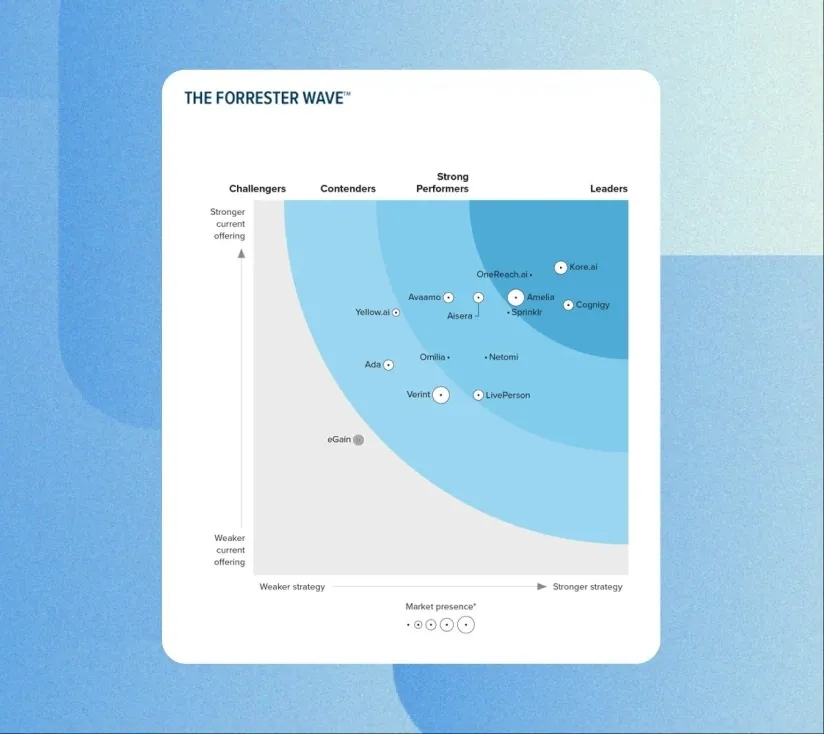
This article explores why this capability has become necessary, where Agentic AI fits within the broader evolution of healthcare technology, how it supports complex administrative workflows, and how Kore.ai enables these capabilities in real operational environments.
How agentic AI helps the healthcare industry
Every healthcare leader knows this feeling: a workflow looks simple until you try to run it in the real world. Eligibility checks should take minutes, yet they turn into a hunt across portals. A prior authorization “packet” becomes a puzzle of clinical notes, forms, and payer rules. Even care coordination, something meant to support patients, ends up stretched across systems that don’t talk to each other.
It isn’t because your teams lack skill. It isn’t because your technology is broken. It’s because healthcare workflows are built on interdependencies. One missing field, one mismatched identifier, one payer rule update, and everything slows down.
Traditional automation tools helped, but only within the boundaries of predefined steps. They couldn’t account for:
- the variability between patients
- the constant changes in payer requirements
- the inconsistencies in how data is captured
- the exceptions that require human judgment
- the external systems that don’t follow your rules
This is the part of the workflow your teams carry on their shoulders, gathering, interpreting, fixing, sequencing, and pushing work forward. And this is exactly where Agentic AI steps in. Instead of automating a single task, Agentic AI helps with the coordination that has always depended on people. It can:
- Understand the goal of a process
- Plan the steps required
- Retrieve and reconcile data from multiple systems
- Adjust when something changes
- Escalate when human judgment is needed
In other words, it finally supports the “in-between” work. the work no system has ever really handled well. This does not replace your EHR, your RCM platform, or your payer systems.
It makes them work together the way your teams wish they already did.
- For providers, that means fewer interruptions and more time for meaningful clinical work.
- For payers, that means more consistent processing and better compliance.
- For life sciences organizations, that means smoother coordination across data-heavy workflows.
Agentic AI helps close the gap between what your systems do and what your teams still have to do manually. It gives healthcare organizations something they’ve never truly had: technology that doesn’t just understand the work, it helps move the work.
3. Benefits of agentic AI in healthcare
Healthcare leaders today face growing pressure, improve throughput, reduce administrative load, strengthen compliance, and modernize operations, all without disrupting the core systems you rely on. You’ve already optimized individual workflow steps. Yet the coordination layer, the part that holds everything together, still depends heavily on people.
This is where Agentic AI delivers value that earlier technologies couldn’t:
it doesn’t just automate a task, it helps carry the workflow, moving work forward in real time instead of waiting for humans to intervene.
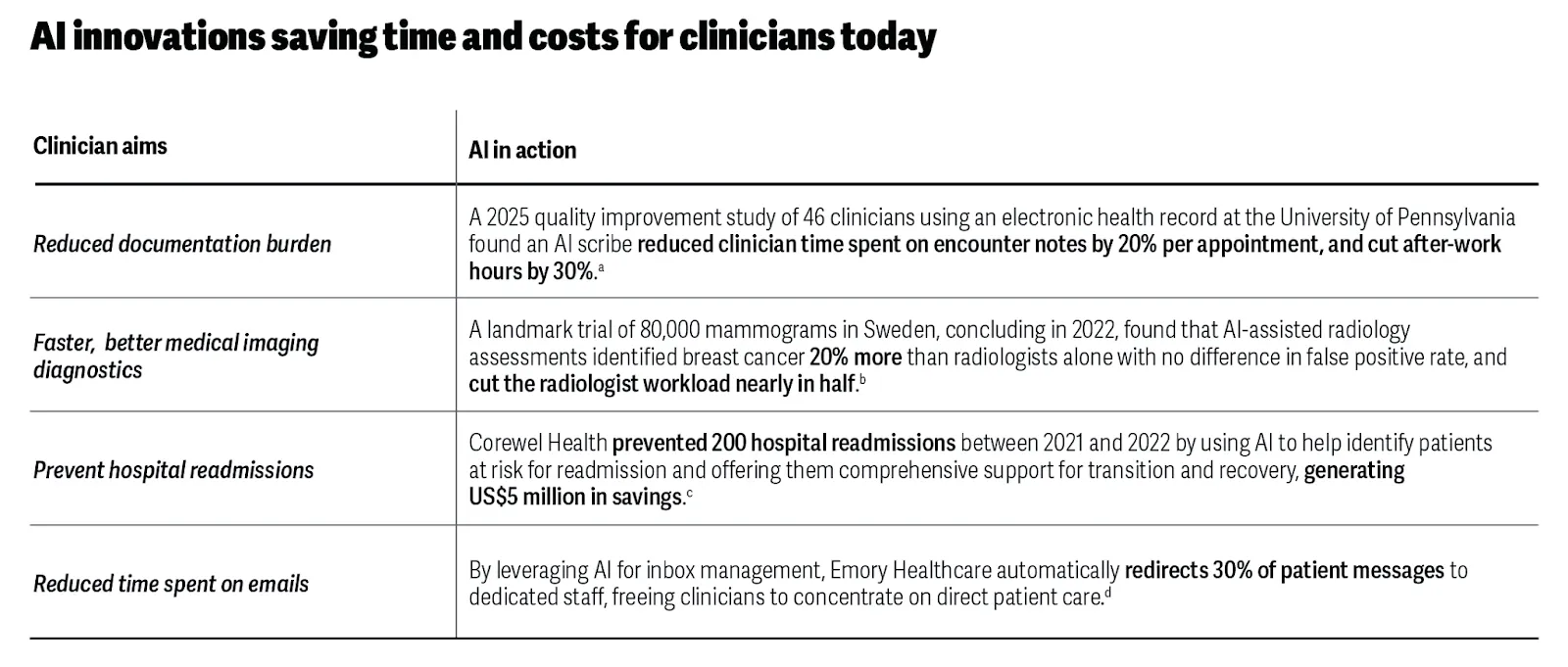
Below are the benefits healthcare organizations consistently experience when this coordination burden begins to lift.
1. Reduced administrative co-ordination burden
Every leader knows this pain: the steps themselves aren’t hard, it’s the chasing, the checking, the moving of work across systems that drains your team’s time. Agentic AI helps by taking on the coordination work your staff performs today: sequencing tasks, validating completeness, retrieving missing data, and progressing steps the moment conditions are met.
What this means in daily operations:
- Less jumping across portals and EHR screens
- Fewer stalls due to missing or incomplete information
- Better ability to absorb peak volumes without adding headcount
- Teams focusing on judgment-driven cases instead of repetitive navigation
2. Improved information accuracy and consistency
Much of the friction in healthcare workflows comes from small inconsistencies, a mismatched date of birth, a missing form, and documentation stored in different systems. Each discrepancy creates rework and delays. Agentic AI continuously checks and reconciles information as it moves through the workflow, helping ensure the downstream steps begin with clean, complete data.
This leads to:
- Reduced downstream errors
- More complete submissions
- Less back-and-forth between teams
- Greater confidence in data readiness at every stage
3. Increased throughput and smoother operational flow
Work slows not because steps are inefficient, but because they depend on staff availability. When queues pile up, even optimized workflows stall. Agentic AI helps maintain operational rhythm by initiating next steps automatically as soon as prerequisites are satisfied, regardless of time, volume, or staffing levels.
Operational impact:
- Faster cycle times
- Fewer backlogs at peak times
- More predictable workflow progression
- Less idle downtime across queues
4. Strengthened governance, oversight, and auditability
Healthcare workflows require transparency, especially when decisions touch billing, documentation, or regulatory risk. Agentic AI provides structured guardrails and auditable traces for every action it performs, giving leaders clear visibility into workflow behavior without adding new layers of compliance complexity.
This improves:
- Policy alignment and compliance posture
- Audit readiness
- Predictability and safety of multi-step workflows
- Visibility for quality, risk, and compliance teams
5. Better staff experience and reduced cognitive load
Your teams juggle EHRs, portals, spreadsheets, rules, payer logic, and documentation, often all at once. This cognitive load is one of the biggest contributors to burnout. Agentic AI reduces this mental burden by handling the repetitive coordination work that distracts staff from tasks requiring judgment, empathy, and expertise.
This supports:
- Lower cognitive fatigue
- More time for complex or high-value cases
- Better employee satisfaction and retention
- Smoother onboarding for new staff
6. Improved patient and member experience through operational reliability
Patient and member frustration often begins long before the clinical encounter, in delays caused by benefits checks, documentation gaps, authorization backlogs, or inaccurate status updates. By stabilizing back-end workflows, Agentic AI helps organizations provide clearer timelines and more reliable communication.
Consumers experience:
- Faster scheduling and intake
- Fewer care delays
- More accurate billing interactions
- Less anxiety during administrative steps
7. Scalable automation without replacing existing systems
Healthcare organizations operate within mature, interconnected ecosystems. Replacing core systems is not an option, nor is layering fragile automation on top of them. Agentic AI works with existing systems, using them as part of the workflow instead of requiring changes to them.
This enables:
- Expansion of automation into more complex workflows
- Minimal disruption to current operations
- Reduced reliance on brittle, task-level automations
- Better return on existing technology investment
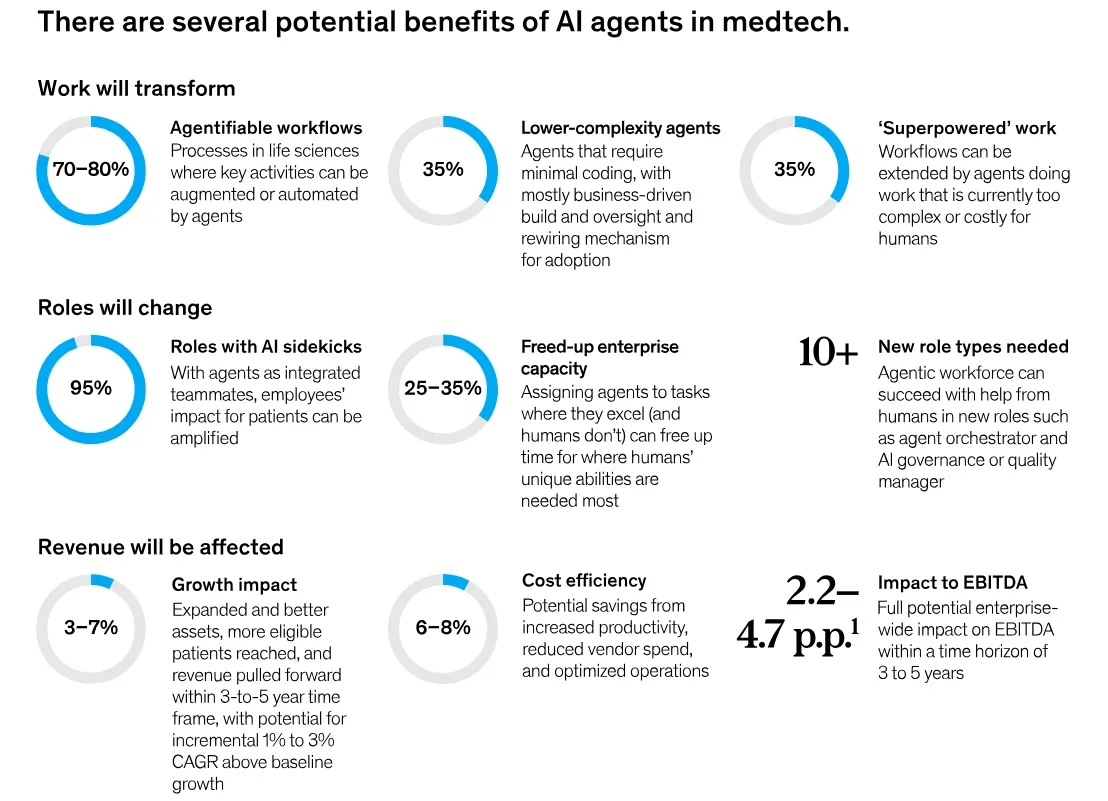
5. Key use-cases of agentic AI in healthcare
Healthcare organizations are beginning to see where agentic AI delivers tangible value. The most successful deployments share a common thread. They focus on administrative complexity, high-volume workflows, fragmented data, and processes that require multi-step coordination across teams or systems. This is where autonomy, reasoning, and cross-system orchestration create measurable impact. Below is a structured view of the highest-value healthcare agentic AI use cases emerging across providers and payers, supported by evidence from industry research and early implementations.
6. Challenges adopting agentic AI in healthcare
As interest in agentic AI grows across healthcare, most organizations quickly discover that scaling intelligent, cross-system workflows is far more complex than adopting traditional automation. While the potential is significant, successful deployment requires a strong foundation of data readiness, governance, infrastructure, and change management. Below are the core challenges:.
1. Data fragmentation and interoperability
Every healthcare leader knows this challenge well: the data needed to complete a workflow rarely lives in one place. Instead, it sits across EHRs, billing platforms, portals, faxes, payer systems, and aging departmental tools. Even with modern integration layers, the information often differs in format, timing, completeness, or context. Agentic AI depends on consistent, high-quality data to act reliably. When data is fragmented, the agent must pause, escalate, or request clarification, creating new bottlenecks if not addressed upfront.
In practice, this means:
- Workflow continuity is only as strong as your data environment
- Agents may surface data-quality issues earlier than humans do
- Interoperability maturity directly affects automation success
2. Governance, safety, and oversight
Unlike rule-based bots, agentic systems make decisions in real time. That flexibility is powerful, but it also demands clear guardrails. Healthcare leaders often compare this phase to onboarding a new team member: you do not grant full autonomy on day one. You provide structure, oversight, supervision, and gradually increase responsibility as confidence grows.
Organizations typically define:
- What agents can do independently
- When they must escalate decisions
- How every action is logged, audited, and reviewed
- Governance frameworks that align with internal policy and CMS, HIPAA, or payer expectations
Strong governance isn’t optional, it’s the foundation for safe, responsible scale.
3. Workforce readiness and change management
Agentic AI doesn’t only change workflows, it reshapes the rhythm of work. Even if tasks remain familiar, the sequence, timing, and handoffs shift. Staff need clarity on how to collaborate with agents, when to intervene, and how exceptions will be handled.
Successful organizations invest early in:
- Helping teams understand how agent-supported workflows differ
- Re-defining roles when agents handle coordination work
- Training on when agents escalate and how staff should respond
- Updating SOPs, documentation, and communication channels
Without workforce readiness, even the strongest agent strategy struggles.
4. Technical maturity and infrastructure foundations
Agentic AI relies heavily on the plumbing underneath, APIs, identity systems, message brokers, event frameworks, integration layers, and stable test environments. Organizations with mixed legacy systems sometimes find that the technology foundation must evolve before agents can reliably orchestrate multi-step tasks.
Key considerations include:
- API availability and consistency
- Authentication and access patterns
- Stable environments for testing multi-step workflows
- Monitoring to ensure systems respond predictably
Agentic AI does not require replacing core systems, but it does require that those systems can “participate” in coordinated automation.
5. Regulatory, privacy, and legal considerations
Agentic AI interacts with PHI, touches billing processes, and may influence clinical or operational decision pathways. That means compliance cannot be an afterthought. Leaders often emphasize the need for complete traceability, the ability to show what an agent did, why it did it, and how each action aligns with policy.
Organizations typically focus on:
- Detailed logs of all agent actions
- Alignment with HIPAA, CMS policies, payer rules, and organizational standards
- Clear oversight models for monitoring agent decisions
- Privacy-first data handling and transfer practices
This is essential for both internal trust and external regulatory readiness.
6. Scaling beyond pilots
Running a successful pilot is relatively easy. Scaling agentic workflows across departments is where the real challenge emerges. Each new workflow has different data sources, edge cases, exceptions, and system dependencies. Without a shared approach, organizations end up with disconnected automations instead of an enterprise strategy.
To scale successfully, leaders adopt:
- A platform approach rather than isolated point solutions
- Shared governance standards
- Joint ownership across IT, operations, compliance, and business units
- Repeatable models for prioritization, rollout, and refinement
The question every healthcare leader eventually asks
After working through data challenges, governance models, workforce readiness, and scaling complexity, many healthcare leaders arrive at the same point of reflection:
“How do we actually operationalize agentic AI, without rebuilding everything we already have?”
It’s a fair question. Healthcare systems aren’t greenfield environments. You can’t rip and replace your EHR, RCM platform, call center stack, or payer integrations. And you shouldn’t have to.
This is precisely where Kore.ai’s approach resonates.
Healthcare leaders we work with often describe the impact in deeply practical terms. During a recent conversation with an executive from a large U.S. healthcare organization, they put it simply:
“Every minute we save behind the scenes becomes a better experience for someone on the front line.”
That sentiment reflects why agentic AI is gaining momentum, because operational efficiency is no longer just a cost conversation, it’s a patient and member experience conversation.
A co-ordination layer built for healthcare’s reality
Instead of asking organizations to modernize their architecture, Kore.ai is designed to work within the systems, constraints, and operational rhythms you already depend on. The platform serves as an intelligent coordination layer, bridging the gaps between EHRs, RCM tools, payer portals, documents, call centers, and communication channels.
Real-world example: Scaling Agentic AI inside a large healthcare enterprise
A large U.S. healthcare enterprise used Kore.ai’s platform to transform critical workflows across pharmacy operations and customer service. What started as a small conversational initiative quickly expanded into a full agentic automation ecosystem, with hundreds of coordinated agents working across systems, documents, and communication channels.
Within the first six months of replacing a decade-old legacy system, the organization saw:
- 40% increase in self-service completion rates
- 20% reduction in manual actions performed by frontline staff
These coordinated agents now manage routine but essential operational steps, retrieving data, validating information, sequencing tasks, escalating exceptions, so pharmacists, technicians, and service teams can focus on higher-value, patient-facing work.
This transformation reflects what many organizations are now experiencing: agentic AI succeeds when it strengthens the systems teams already rely on, rather than replacing them.
What follows is a look at how Kore.ai enables agentic workflows inside real, complex healthcare environments.
How Kore.ai supports Agentic healthcare workflows
Kore.ai is a leading agentic AI platform for healthcare that provides capabilities to allow organizations incorporate agentic intelligence into service operations without restructuring their existing environment. These capabilities are designed with healthcare’s layered systems and decision points in mind.
Multi-agent workflow orchestration
Coordinates end-to-end workflows across scheduling systems, EHRs, RCM platforms, payer portals, and communication channels. By interpreting the intent of each task and sequencing actions across disconnected systems, agents help keep work moving even when inputs vary or conditions shift. This orchestrated approach reduces manual handoffs and improves overall workflow continuity.
Multimodal understanding and interaction
Supports workflows that rely on multiple forms of information, structured EHR fields, unstructured clinical notes, PDFs, faxes, forms, voice calls, and chat messages. Agents can interpret, extract, and act on these inputs consistently, enabling them to gather data, process documents, and respond across channels. This helps workflows progress reliably even when information comes in diverse formats.
Deep integration support
Connects seamlessly with EHRs, CRM systems, billing platforms, payer systems, and call center technologies. By leveraging APIs, HL7/FHIR interfaces, and interoperability middleware, agents can access, update, and reconcile data across core enterprise systems. This integration capability allows organizations to adopt agentic workflows without replacing or redesigning foundational technology.
Prebuilt healthcare accelerators
Provides ready-to-use templates for high-volume workflows such as eligibility verification, appointment management, benefit clarification, claims status inquiries, and follow-up coordination. These accelerators help organizations adopt agentic capabilities faster, reducing the time needed for design and enabling teams to focus on customization rather than starting from scratch.
Observability and operational insight
Offers real-time visibility into how workflows progress, how agents make decisions, and when exceptions occur. Teams can review step-level actions, monitor performance across systems, and identify patterns or bottlenecks. This transparency strengthens governance, supports compliance, and enables continuous refinement of workflows and agent behavior.
No-code design tools
Allows operational and technical teams to configure workflows, adjust logic, refine agent behavior, and deploy updates without heavy engineering effort. This lowers the barrier to adoption, accelerates iteration cycles, and empowers teams to adapt workflows quickly as business rules, payer requirements, or operational needs evolve.
Omnichannel engagement
Supports consistent, connected interactions across voice, chat, SMS, email, and digital portals. Whether engaging patients, members, providers, or internal staff, agents can deliver the same workflow logic and access the same underlying data. This ensures continuity across touchpoints and reduces fragmentation in service experiences.
Why Kore.ai’s approach fits healthcare operational realities
Kore.ai’s platform is built to complement the systems healthcare organizations already rely on, rather than requiring a replacement or major architectural overhaul. Its capabilities are aligned with how healthcare operations actually function, complex, interconnected, and dependent on timely coordination.
Organizations exploring Kore.ai often highlight its alignment with:
- Governance and oversight needs
Guardrails, audit logs, decision traces, and observability dashboards support safe workflow execution. Kore.ai’s compliance with HIPAA, SOC 2 Type II, HITRUST, and ISO 27001 helps ensure that agentic workflows operate within rigorous healthcare security and privacy standards while remaining fully auditable. - Existing infrastructure
Kore.ai uses current APIs, standards, integrations, and workflows already in place, helping teams adopt agentic capabilities without disruption. - Operational variability
The platform can support workflows that differ by service line, payer rules, or local procedures, acknowledging that healthcare seldom operates in a one-size-fits-all pattern. - Scalability across departments
Once established, agentic workflows can extend to additional functions such as billing, care coordination, contact center operations, and provider services.
The outcome
With Kore.ai acting as a coordination and engagement layer, healthcare organizations can support smoother workflow progression, reduce manual handoffs, and create more consistent operational experiences. This helps teams manage administrative responsibilities more sustainably while ensuring that patients, members, and providers receive timely, accurate support.
Importantly, Kore.ai’s approach does not ask organizations to simplify their complexity, it is built to work within it. Agentic capabilities become an extension of the systems and processes already in place, strengthening the operational fabric rather than replacing it.
Conclusion
Healthcare operations have always depended on people, people who reconcile mismatched details, chase missing data, navigate exceptions, and keep work moving when systems fall short. Even with strong digital foundations, the coordination layer has remained stubbornly human, becoming one of the biggest sources of friction, cost, and burnout across the industry.
Agentic AI represents an inflection point. Not because it replaces core systems or alters the fundamentals of care delivery, but because it finally supports the part of the workflow technology has never meaningfully touched: the real-time orchestration of multi-step, interdependent tasks. It brings adaptability where processes have been rigid, continuity where workflows stall, and clarity where operational noise overwhelms.
The organizations that succeed with agentic AI won’t be the ones that automate the most tasks, but the ones that build the strongest foundations, governance, observability, data maturity, and cross-functional ownership. When those elements come together, agentic AI becomes more than an efficiency tool. It becomes a strategic capability: one that reduces administrative weight, strengthens compliance, improves patient and member experiences, and allows teams to focus on the work only humans can do.
Kore.ai supports this transition by offering a platform built for healthcare’s complexity, secure, compliant, interoperable, and designed to operate within the systems you already rely on. As healthcare continues to evolve, the opportunity is not to automate everything but to make everyday work more connected, predictable, and sustainable.
Agentic AI is not the destination. It is the next step towards a healthcare system where coordination no longer depends on human endurance alone, and where people can return their time and attention to the moments that matter most, patients, members, and better care.