




Agentic AI Apps
AI Solutions
Pre-built Applications

Ready-to-deploy applications across industries and functions.

AI for Banking
AI for Healthcare
AI for Retail
AI for IT
AI for HR
AI for Recruiting
Application Accelerators

Leverage pre-built AI agents, templates, and integrations from the Kore.ai Marketplace.

Kore.ai Marketplace
Pre-built agents
Templates
Integrations
Tailored Applications

Design and build applications on our Agent Platform using our enteprise modules.

Platform
Agent Platform

Your strategic enabler for enterprise AI transformation.

Learn more
Enterprise Modules
AI for Work
AI for Service
AI for Process
Top Resources
From search to action: what makes agentic AI work in practice
AI use cases: insights from AI's leading decision makers
Beyond AI islands: how to fully build an enterwise-wide AI workforce
QUICK LINKS
About Kore.aiCustomer StoriesPartnersResourcesBlogWhitepapersDocumentationAnalyst RecognitionGet supportCommunityAcademyCareersContact Us
Agent Platform
Agent Platform
Agent Platform

Your strategic enabler for enterprise AI transformation.

learn more
PLATFORM MODULES
Multi-Agent Orchestration
AI Engineering Tools
Search + Data AI
Observability
No-Code + Pro-Code Tools
AI Security + Governance
Agent Management Platform
Integrations
Enterprise Modules
For Service
AI AgentsAgent AI AssistanceAgentic Contact CenterQuality AssuranceProactive Outreach
For Work
Modules
Enterprise SearchIntelligent OrchestratorPre-Built AI AgentsAdmin ControlsAI Agent Builder
Departments
SalesMarketingEngineeringLegalFinance
For Process
Process AutomationAI Analytics + MonitoringPre-built Process Templates
upcoming event
Recent AI Insights
What's new in AI for Work: features that drive enterprise productivity
AI INSIGHT
20 Feb 2026
Parallel Agent Processing
AI INSIGHT
16 Jan 2026
The AI productivity paradox: why employees are moving faster than enterprises
AI INSIGHT
12 Jan 2026
Agent Marketplace
More
More
Resources
Resource Hub
Blog
Whitepapers
Webinars
AI Research Reports
AI Glossary
Videos
AI Pulse
Generative AI 101
Responsive AI Framework
CXO Toolkit
Private equity
support
Documentation
Get support
Submit RFP
Academy
Community
COMPANY
About us
Leadership
Customer Stories
Partners
Analyst Recognition
Newsroom
Events
Careers
Contact us
Agentic AI Guides
forrester cx wave 2024 Kore at top
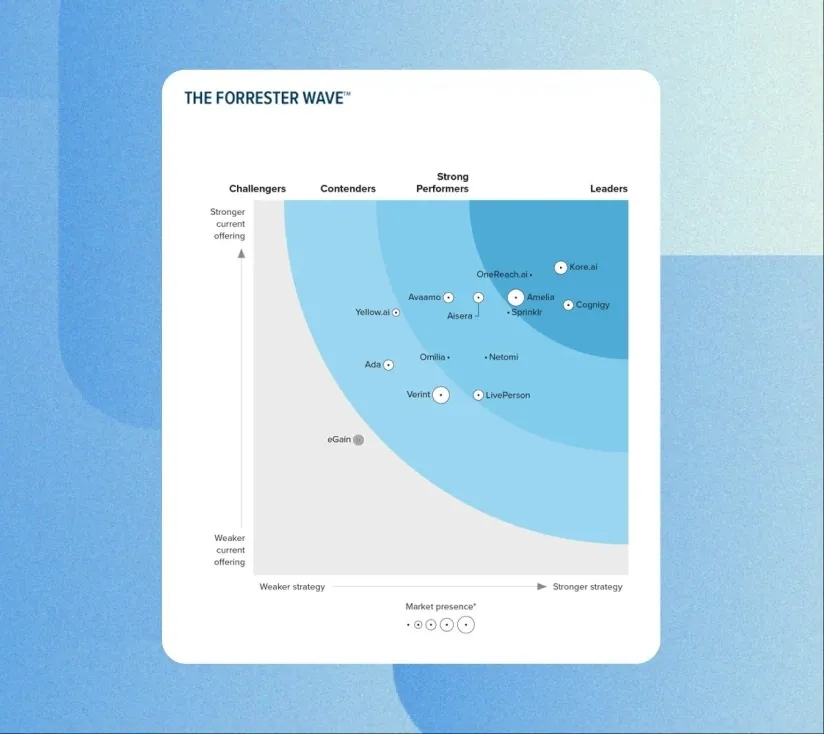
Kore.ai named a leader in The Forrester Wave™: Conversational AI for Customer Service, Q2 2024
Generative AI 101
CXO AI toolkit for enterprise AI success
upcoming event

HumanX is one of the leading global conferences focused on artificial intelligence (AI) — designed for senior leaders, technologists, investors, and decision-makers shaping enterprise deployment of AI technologies.

San Francisco
6 Apr
register
Talk to an expert
Not sure which product is right for you or have questions? Schedule a call with our experts.
Request a Demo
Double click on what's possible with Kore.ai
Sign in
Get in touch
Background Image 1
Blog
Conversational AI
LLM alignment, hallucination & misinformation

LLM alignment, hallucination & misinformation

Published Date:
January 10, 2025
Last Updated ON:
February 18, 2026

This study yet again shows the importance of data discovery, data design & data delivery to the LLM; all with human supervision. This study also illustrates the lack of current market readiness and growing future demand for a Human-In-The-Loop approach for data development. Especially in an AI-Accelerated scenario, also referred to as weak-supervision.

What is alignment?

Firstly, what is alignment? Alignment refers to ensuring models behave in accordance to what the intention of the prompt was. This comes down to the accuracy of prompt engineering. Prompts are in essence a body of text where the user defines, or rather describes, their intent. And by implication the user describes the intended outcome in the prompt.
A process of optimising prompts via an iterative process can aid in model alignment, where prompts are refined for specific models and use-cases. Hence an iterative process of convergence to an optimal prompt for a specific solution.

OpenAI devoted six months to iteratively aligning GPT-4 before its release. — Source

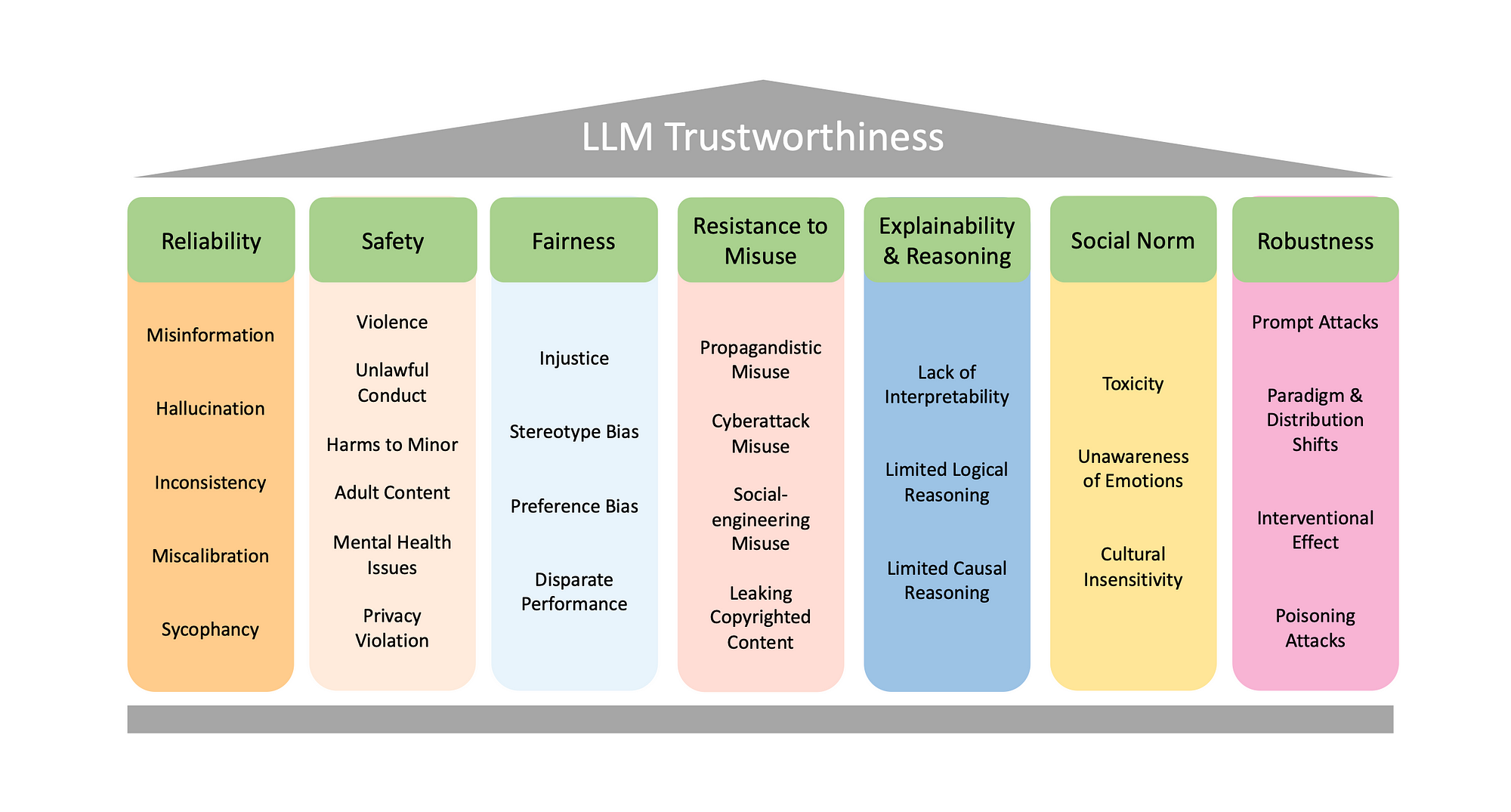
The image above shows the taxonomy explored in the study with seven overarching categories: reliability, safety, fairness and bias, resistance to misuse, interpretability, goodwill, and robustness.

And each major category contains several sub-categories, constituting 29 sub-categories.

LLMs are Non-deterministic

In the context of LLMs, non-deterministic means that the same prompt submitted to an LLM at different times, will most probably yield different results.
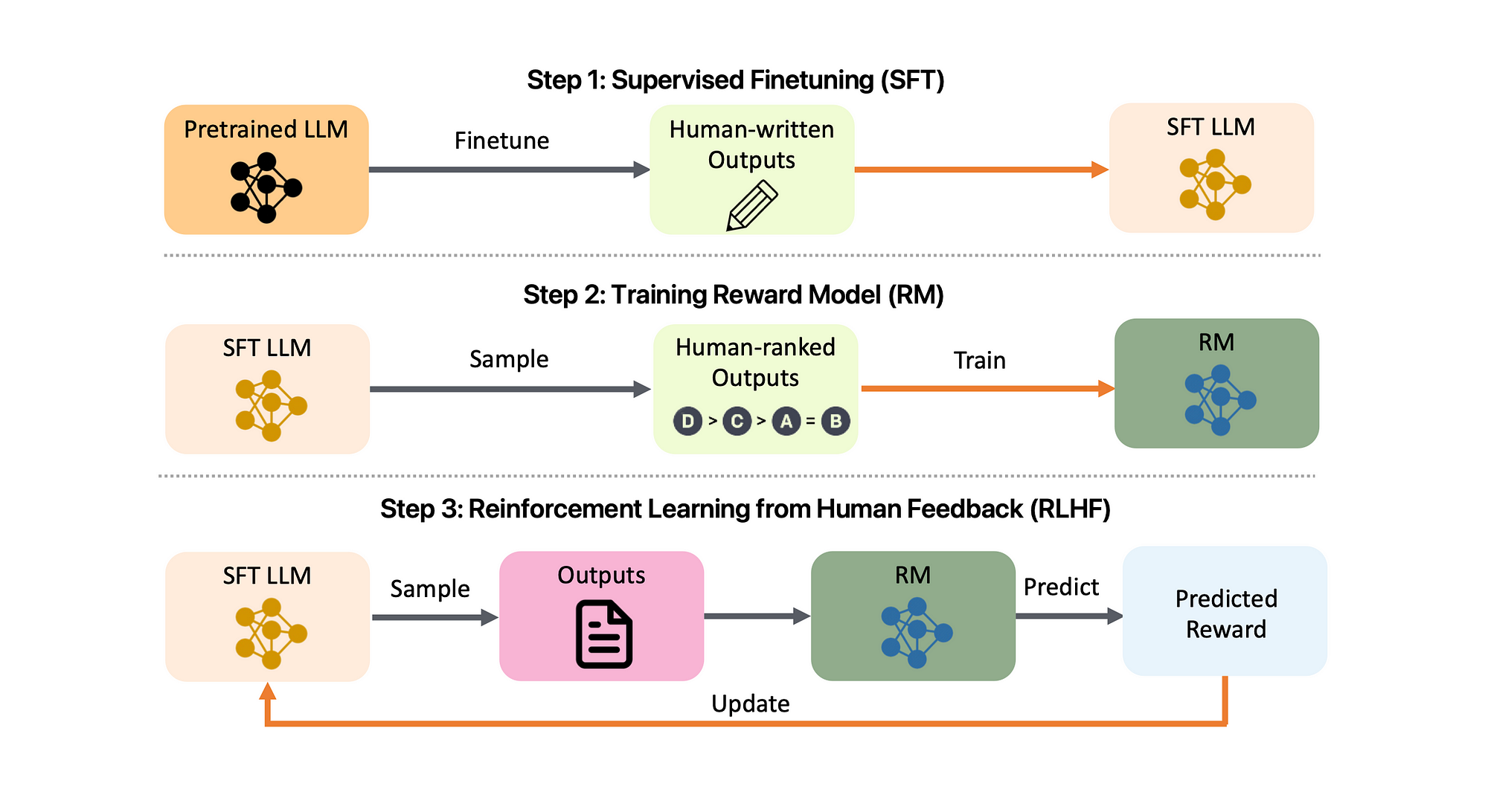
In order to deal better with the non-deterministic nature of LLMs, training can be used via various avenues. The study divides training into three steps.

Step 1 — Supervised Fine-Tuning (SFT): Given a pre-trained (unaligned) LLM that is trained on a large text dataset, we first sample prompts and ask humans to write the corresponding (good) outputs based on the prompts. We then fine-tune the pre-trained LLM on the prompt and human-written outputs to obtain SFT LLM.

Step 2 — Training Reward Model: We again sample prompts, and for each prompt, we generate multiple outputs from the SFT LLM, and ask humans to rank them. Based on the ranking, we train a reward model (a model that predicts how good an LLM output is).

Step 3 — Reinforcement Learning from Human Feedback (RLHF): Given a prompt, we sample output from the SFT LLM. Then we use the trained reward model to predict the reward on the output. We then use the Reinforcement Learning (RL) algorithm to update the SFT LLM with the predicted reward.

The three steps highlighted by the study is helpful, but I still prefer the data discovery, data development and data design approach.

Data Discovery done right can aid immensely in using existing conversational data and ensuring the data which is designed, matches the desired conversations of the users.

From here via an AI accelerated latent space (data productivity platform) discovered data can be design and further developed via weak human supervision.
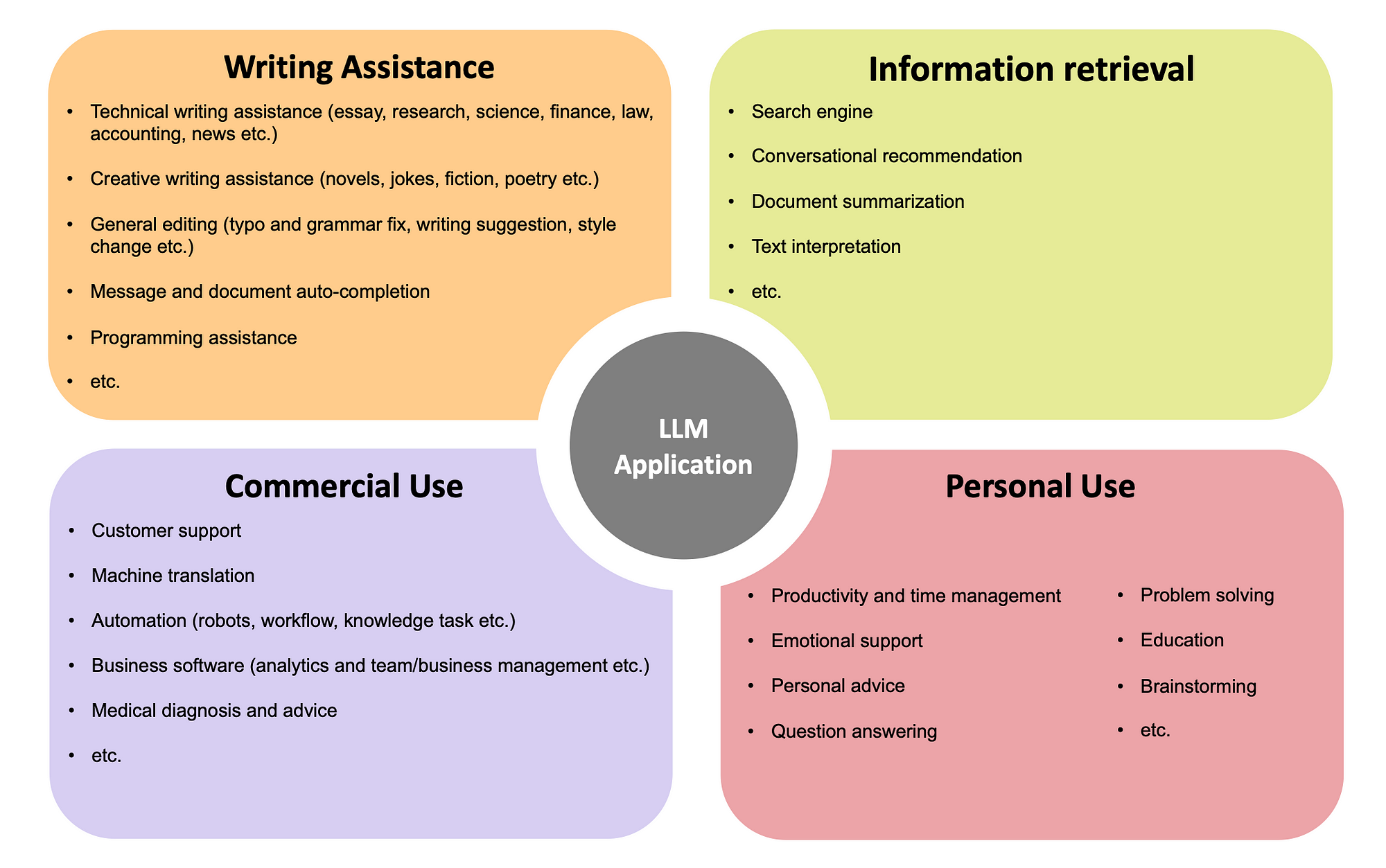
The study defines the current major use-cases of LLMs into the four main categories as seen in the image. The study does state that this diagram is not exhaustive, and there is scope for improvement.

Hallucination & Misinformation

Misinformation

Misinformation mostly refers to wrong or biased answers and can also be the result of no well-formed or sufficiently refined prompt engineering.

Intrinsic Hallucination

Hallucination may consist of fabricated contents that conflict with certain source content.

Extrinsic Hallucination

Or cannot be verified from the existing sources.

Hallucination can be mitigated by increasing training data, especially accurate contextual reference data at inference.

Or a process of ranking and reward with RLHF.

Finally

Everyone is trying to figure out how to optimise build applications using LLMs, I see this as the data delivery phase. The upcoming phase are data discovery, data design and data development.

Find the full study here. 

Share
Link copied
authors
Cobus Greyling
Cobus Greyling
Chief Evangelist
Forrester logo at display.
Kore.ai named a leader in the Forrester Wave™ Cognitive Search Platforms, Q4 2025
Access Report
Gartner logo in display.
Kore.ai named a leader in the Gartner® Magic Quadrant™ for Conversational AI Platforms, 2025
Access Report
Stay in touch with the pace of the AI industry with the latest resources from Kore.ai

Get updates when new insights, blogs, and other resources are published, directly in your inbox.

Subscribe
Thank you! Your submission has been received!
Oops! Something went wrong while submitting the form.

Recent Blogs

View all
Top 8 AI agents for customer service | Tested & reviewed (2026)
March 17, 2026
Top 8 AI agents for customer service | Tested & reviewed (2026)
AI agents in retail: 12 proven use cases & examples (2026)
March 5, 2026
AI agents in retail: 12 proven use cases & examples (2026)
The end of manual AP: Zero-Touch invoice processing with AI for Process
February 20, 2026
The end of manual AP: Zero-Touch invoice processing with AI for Process
Accelerate time-to-value from AI

Find out how Kore.ai can help

Talk to an expert
Start using an AI agent today

Browse and deploy our pre-built templates

Marketplace
Background Image 4
Background Image 9
You are now leaving Kore.ai’s website.

‍

Kore.ai does not endorse, has not verified, and is not responsible for, any content, views, products, services, or policies of any third-party websites, or for any verification or updates of such websites. Third-party websites may also include "forward-looking statements" which are inherently subject to risks and uncertainties, some of which cannot be predicted or quantified. Actual results could differ materially from those indicated in such forward-looking statements.


Click ‘Continue’ to acknowledge the above and leave Kore.ai’s website. If you don’t want to leave Kore.ai’s website, simply click ‘Back’.

CONTINUEGO BACK
Agentic AI applications for the enterprise
English
Spanish
Spanish
Spanish
Spanish
Pre-Built Applications
BankingHealthcareRetailRecruitingHRIT
Kore.ai agent platform
Platform OverviewMulti-Agent OrchestrationAI Engineering ToolsSearch and Data AIAI Security and GovernanceNo-Code and Pro-Code ToolsIntegrations
 
AI for WorkAI for ServiceAI for ProcessAgent Marketplace
company
About Kore.aiLeadershipCustomer StoriesPartnersAnalyst RecognitionNewsroom
resources
DocumentationBlogWhitepapersWebinarsAI Research ReportsAI GlossaryVideosGenerative AI 101Responsive AI frameworkCXO Toolkit
GET INVOLVED
EventsSupportAcademyCommunityCareers

Let’s work together

Get answers and a customized quote for your projects

Submit RFP
Follow us on
© 2026 Kore.ai Inc. All trademarks are property of their respective owners.
Privacy PolicyTerms of ServiceAcceptable Use PolicyCookie PolicyIntellectual Property Rights
|
×