The Chain-Of-X phenomenon In LLM prompting
Last Updated
September 29, 2026

Cobus Greyling
Read Time
What’s on this page
In a recent post, I discussed the seemingly emergent abilities of LLMs. A new study argues that Emergent Abilities are not hidden or unpublished model capabilities which are just waiting to be discovered, but rather new approaches of In-Context Learning which are being built.
A number of recent papers have shown that on user instruction to do so, Large Language Models (LLMs) are capable of decomposing complex problems into a series of intermediate steps.
This basic principle was introduced by the concept of Chain-Of-Thought(CoT) prompting for the first time in.
The basic premise of CoT prompting is to mirror human problem-solving methods, where we as humans decompose larger problems into smaller steps.
The LLM then addresses each sub-problem with focussed attention hence reducing the likelihood of overlooking crucial details or making wrong assumptions.
A chain of thought is a series of intermediate natural language reasoning steps that lead to the final output, and we refer to this approach as chain-of-thought prompting. ~ Source
The breakdown of tasks make the actions of the LLM less opaque with transparency being introduced.
Areas where Chain-Of-Thought-like methodology has been introduced are:
- Chain-of-Thought Prompting
- Multi-Modal Reasoning
- Multi-Lingual Scenarios
- Knowledge Driven Applications
- Chain-of-Explanation
- Chain-of-Knowledge
- Chain-of- Verification
- IR Chain-of-Thought
- LLM Guided Tree Of Thought
- Chain-Of-Note
- Least-To-Most Prompting
- Chain Of Empathy
And more…
Least-to-most prompting can be combined with other prompting techniques like chain-of-thought & self-consistency. For some tasks, the two stages in least-to-most prompting can be merged to form a single-pass prompt. — Source
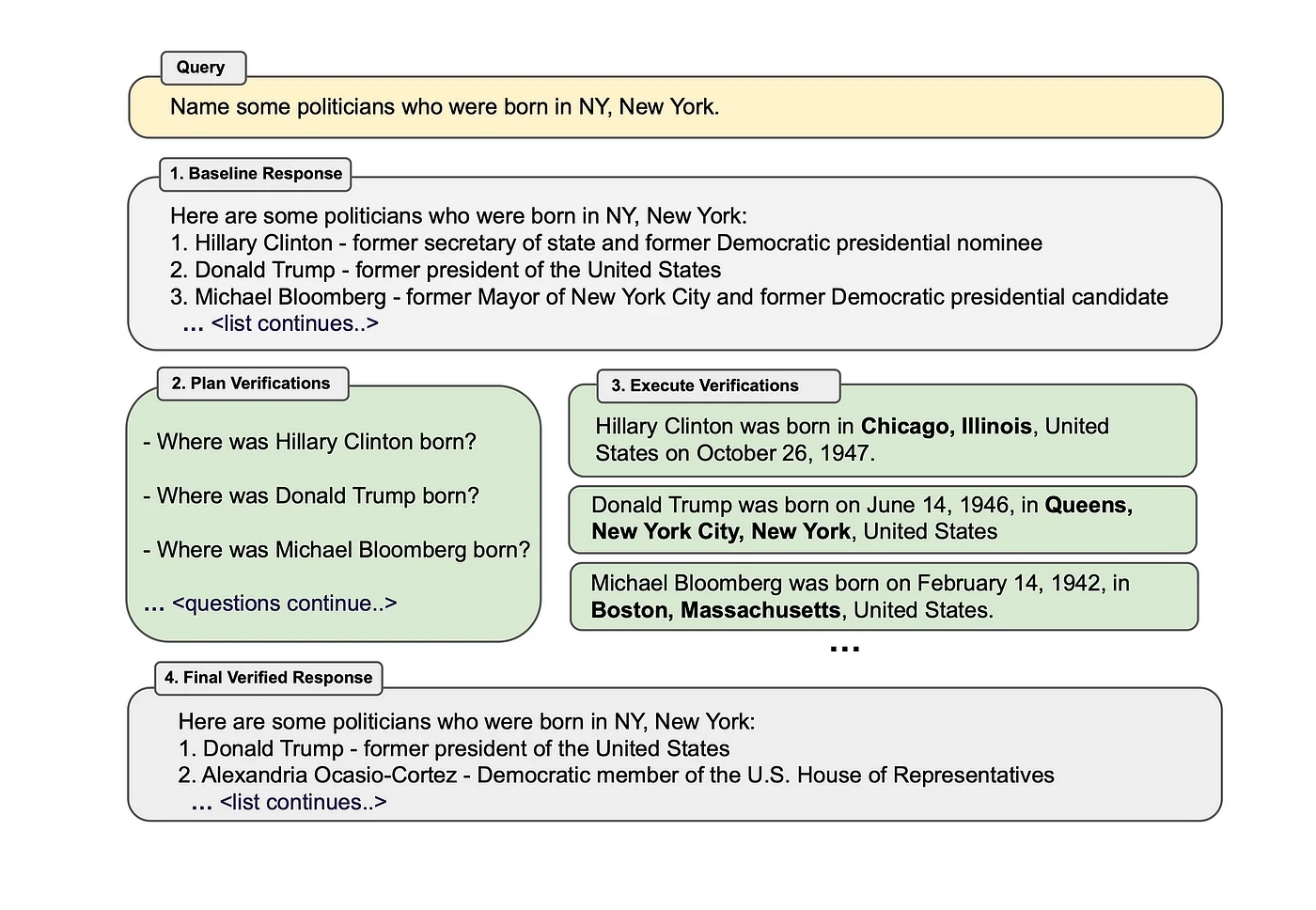
For example, Chain-of-Verification; A recent study highlighted a new approach (CoVe) to address LLM hallucination via a novel implementation of prompt engineering. This approach can be simulated via an LLM playground, and there is already a feature request submitted to LangChain for a CoVe implementation.
Agents
Decomposition also helps autonomous agents to assign sub tasks to an applicable tool.
Below is the decomposed chain-of-thought reasoning of the Agent based on the aforementioned question. The decomposition was performed completely autonomously by the Agent.
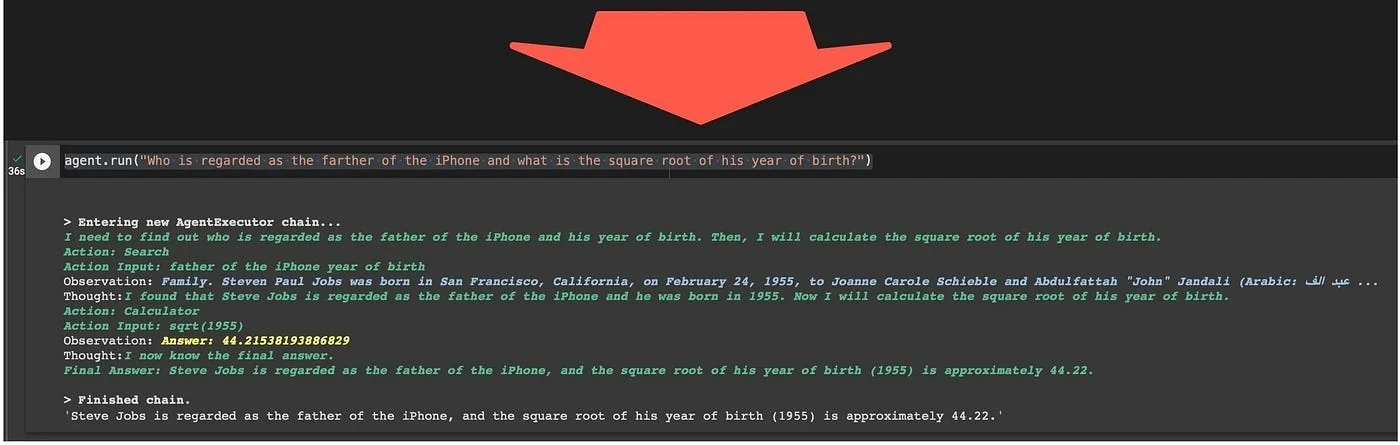
As seen in the image above, Chain-of-thought prompting enables large language models to address challenging arithmetic, common sense, and symbolic reasoning challenges.
Rather than adjusting a distinct language model checkpoint for each new task, one can simply provide the model with several input-output examples to demonstrate the task.
In Closing
What is particularly helpful of Chain-Of-Thought Prompting is that by decomposing the LLM input and LLM output, it creates a window of insight and interpretation.
This Window of decomposition allows for manageable granularity for both input and output, and tweaking the system is made easier.
Chain-Of-Thought Prompting is ideal for contextual reasoning like word problems, common-sense reasoning, math word problems and is very much applicable to any task that we as humans can solve via language.
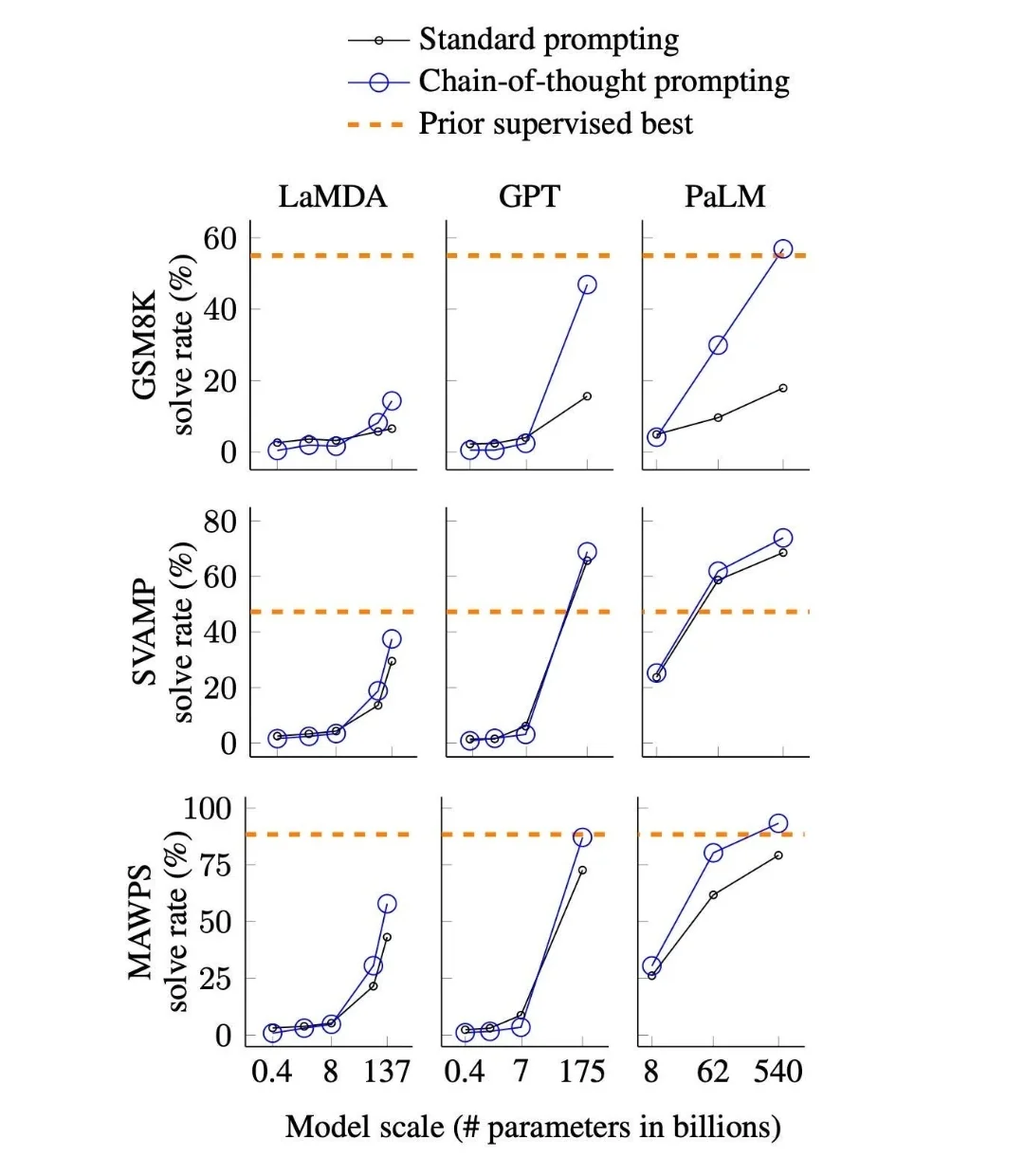
The image below shows a comparison of percentage solve rate based on standard prompting and chain-of-thought prompting.
Chain of thought reasoning provides reasoning demonstration examples via prompt engineering.
Share
Tags