AI Solutions
AI Solutions
AI for Work

Search across silos. Automate workflows. Orchestrate AI agents. Govern with confidence.

learn more
features
Enterprise SearchIntelligent OrchestratorPre-Built AI AgentsAdmin ControlsAI Agent Builder
Departments
SalesMarketingEngineeringLegalFinance
PRE-BUILT accelerators
HRITRecruiting
AI for Service

Leverage Agentic capabilities to empower customers and create personalized experiences.

learn more
features
AI agentsAgent AI AssistanceAgentic Contact CenterQuality AssuranceProactive Outreach
PRE-BUILT accelerators
RetailBankingHealthcare
AI for Process

Streamline knowledge-intensive business processes with autonomous AI agents.

learn more
features
Process AutomationAI Analytics + MonitoringPre-built Process Templates
Use Cases
Zero-Touch IT Operations Management
Top Resources
Scaling AI: practical insights
from AI leaders
AI use cases: insights from AI's leading decision makers
Beyond AI islands: how to fully build an enterwise-wide AI workforce
QUICK LINKS
About Kore.aiCustomer StoriesPartnersResourcesBlogWhitepapersDocumentationAnalyst RecognitionGet supportCommunityAcademyCareersContact Us
Agent Platform
Agent Platform
Agent Platform

Your strategic enabler for enterprise AI transformation.

learn more
FEATURES
Multi-Agent Orchestration
AI Engineering Tools
Search + Data AI
AI Security + Governance
No-Code + Pro-Code Tools
Integrations
GET STARTED
AI for WorkAI for ServiceAI for ProcessAgent Marketplace
LEARN + DISCOVER
About Kore.aiCustomer StoriesPartnersResource HubBlogWhitepapersAI Research ReportsNewsroomAnalyst RecognitionDocumentationGet supportAcademy
GET INVOLVED
AI PulseEventsCommunityCareersContact Us
upcoming event

CCW Berlin brings together international experts, visionary speakers, and leading companies to explore the future of customer experience, AI, and digital transformation in a dynamic blend of congress and exhibition

Berlin
4 Feb
register
Recent AI Insights
The AI productivity paradox: why employees are moving faster than enterprises
AI INSIGHT
12 Jan 2026
The Decline of AI Agents and Rise of Agentic Workflows
AI INSIGHT
01 Dec 2025
AI agents and tools: Empowering intelligent systems for real world impact
AI INSIGHT
12 Nov 2025
Agent Marketplace
More
More
Resources
Resource Hub
Blog
Whitepapers
Webinars
AI Research Reports
AI Glossary
Videos
AI Pulse
Generative AI 101
Responsive AI Framework
CXO Toolkit
support
Documentation
Get support
Submit RFP
Academy
Community
COMPANY
About us
Leadership
Customer Stories
Partners
Analyst Recognition
Newsroom
Events
Careers
Contact us
Agentic AI Guides
forrester cx wave 2024 Kore at top
Kore.ai named a leader in The Forrester Wave™: Conversational AI for Customer Service, Q2 2024
Generative AI 101
CXO AI toolkit for enterprise AI success
upcoming event

CCW Berlin brings together international experts, visionary speakers, and leading companies to explore the future of customer experience, AI, and digital transformation in a dynamic blend of congress and exhibition

Berlin
4 Feb
register
Talk to an expert
Not sure which product is right for you or have questions? Schedule a call with our experts.
Request a Demo
Double click on what's possible with Kore.ai
Sign in
Get in touch
Background Image 1
Blog
Conversational AI
Data Design For Fine-Tuning To Improve Small Language Model Behaviour

Data Design For Fine-Tuning To Improve Small Language Model Behaviour

Published Date:
November 21, 2024
Last Updated ON:
November 12, 2025
Teaching Small Language Models to Self-Correct & Reason by using creative data formats for fine-tuning data. Via Prompt Erasure & Partial Answer Masking.

Small Language Models typically lack self-awareness & tend to exhibit greater confidence in their generated responses. Following an approach of Prompt Erasure & Partial Answer Masking (PAM) drastically improves the quality of SLM responses.

Introduction

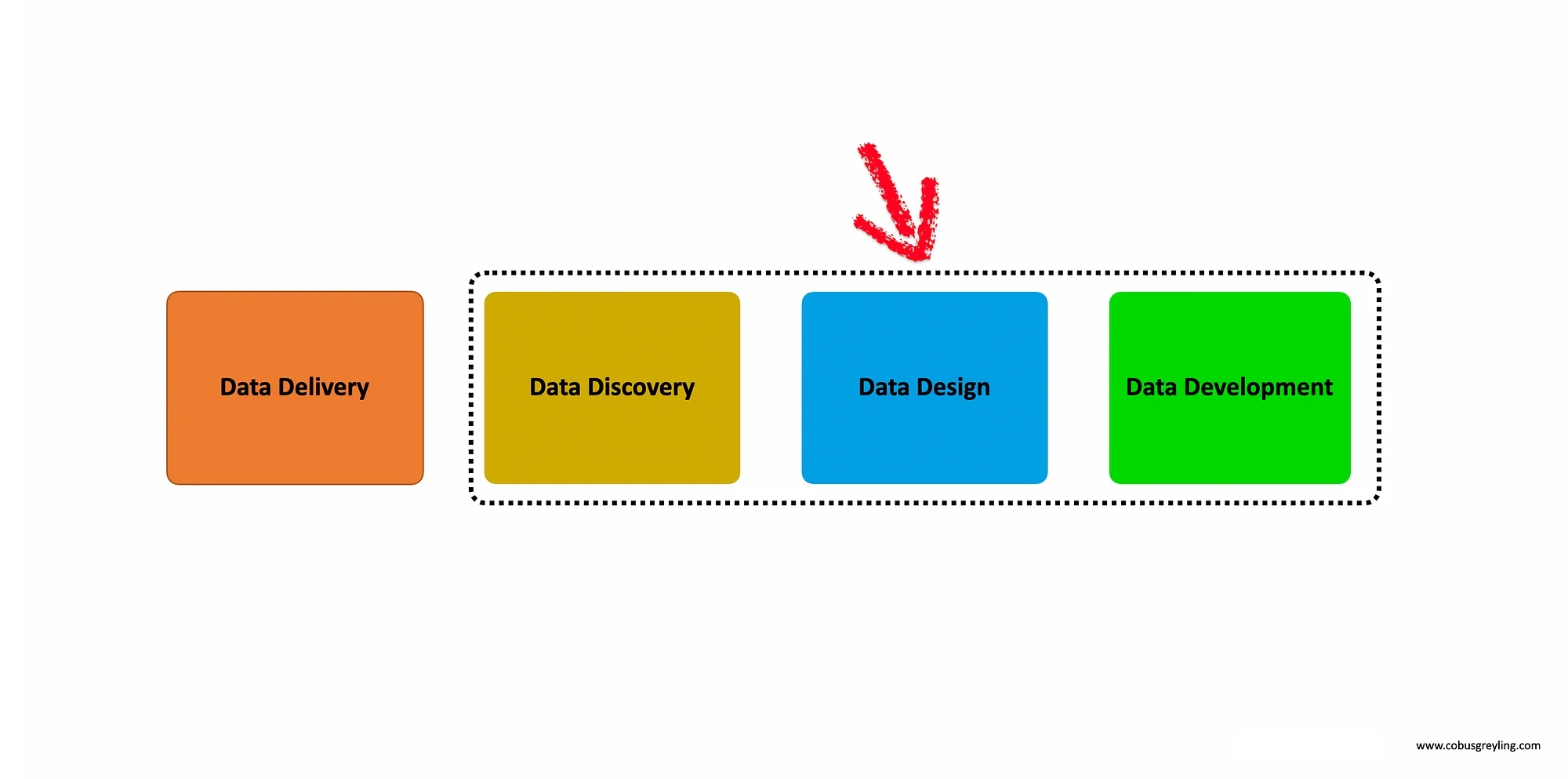
It seems that during the recent past, when it comes to Language Models (both LLMs and SLMs) the focus has been on the data delivery portion. In other words, how to bring proprietary data to the language model at inference.

The process of data delivery can be divided between two main approaches, gradient and non-gradient approach. Non-gradient approaches have received much focus due to it being transparent and not as opaque as gradient/fine-tuning approaches.

By far the most popular non-gradient approach to data delivery has been RAG, in all its variations.

Something I find interesting is that some of the fine-tuning / gradient approaches do not have as its primary aim to imbue the language model with enterprise or domain specific data. But to rather change the behaviour of the model and teach the model, via the structure of the fine-tuning data, specific tasks. These tasks include features like reasoning and self-correction.

Data design

The focus is shifting from data delivery to data design, where the data format is designed in such a way, to imbue the model with specific behavioural abilities.
Data format
Training data design for small-model reasoning

Reasoning

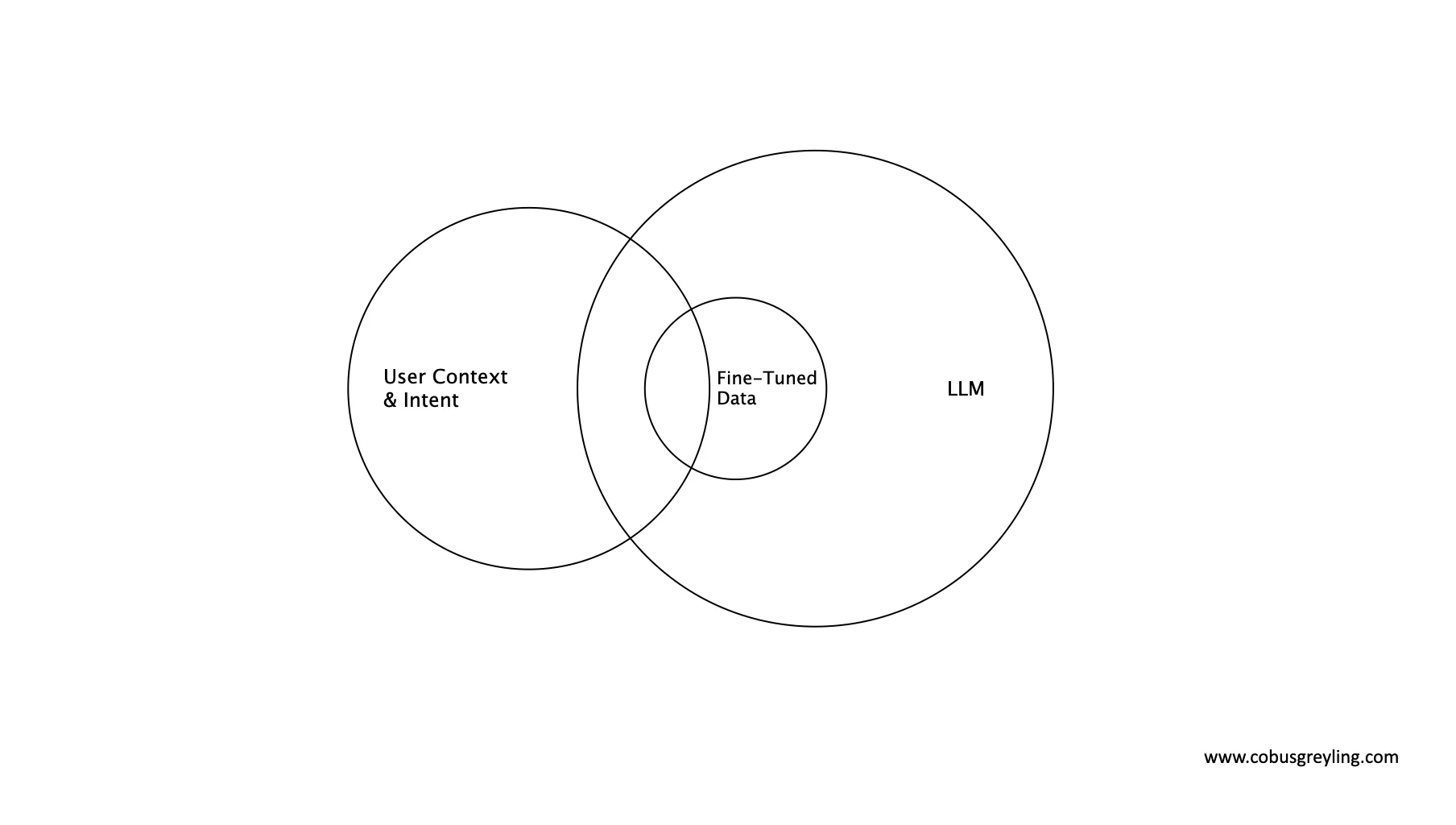
The primary focus from Microsoft Research in training Orca-2, was to create an open-sourced Small Language Model (SLM) which excels at reasoning. This is achieved by decomposing a problem and solving it step-by-step, which adds to observability and explainability.

In order to achieve this, nuanced training data had to be created, an LLM is presented with intricate prompts which is designed with the intention to elicit strategic reasoning patterns which should yield more accurate results.
Reasoning
Header graphic: Data Design for Fine-Tuning

Also, during the training phase, the smaller model is exposed to the task and the subsequent output from the LLM. The output data of the LLM defines how the LLM went about in solving the problem.

But here is the catch, the original prompt is not shown to the SLM.

But here is the catch, the original prompt is not shown to the SLM. This approach of Prompt Erasure, is a technique which turns Orca-2 into a Cautious Reasoner because it learns not only how to execute specific reasoning steps, but to strategize at a higher level on how to approach a particular task.

Rather than naively imitating powerful LLMs, the LLM is used as a reservoir of behaviours from which a judicious selection is made for the approach for the task at hand.

Self-correction

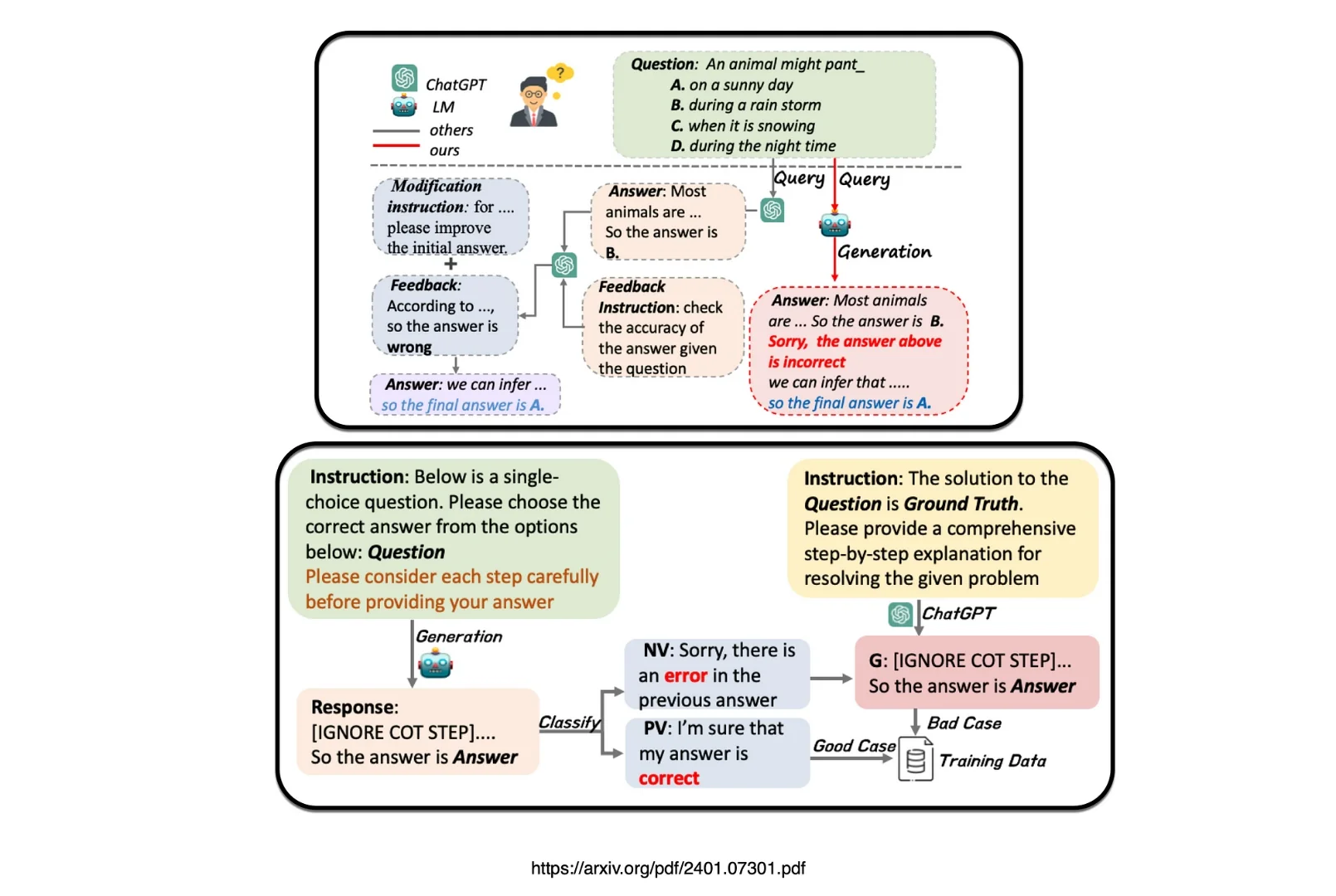
A recent study presented a pipeline  for constructing self-correction training data by proposing an approach called Partial Answer Masking (PAM), aiming to equip the model with the capability of intrinsic self-correction through fine-tuning.

The goal of Partial Answer Masking is to instruct the language model to self-correct.

Answer masking

This study experiments by using Language Models ranging in parameter sizes from 6 billion to 13 billion across two tasks.

Introducing a means to enhance the self-correcting ability of small language models, the study presents Intrinsic Self-Correction (ISC), a mechanism relying on two fundamental capacities: self-verification and self-modification.
Answer masking
Pipeline for partial‐answer masking self-correction

During the fine-tuning phase, the process introduce Partial Answer Masking (PAM) to imbue the model with self-verification capabilities.

The result is the first demonstration that even small language models with as few as 6 billion parameters possess inherent self-correction abilities during response generation, independent of ground truth reliance.

The proposed Intrinsic Self-Correction endeavours to embed self-correction as an innate pattern within Language Models. It entails an autonomous and spontaneous self-correction process, distinct from existing prompt engineering methods.

To equip Small Language Models with self-correction capabilities, a pipeline is devised for constructing self-correction data and establish the data format, which can be universally applied to generate data for self-correction tasks.

Conclusion

These two studies addresses an approach where nuanced training data is created to imbue small language models (SLMs) with specific skills in reasoning and self-correction.

Fine-tuning is normally associated with adding knowledge to a model, augmenting the knowledge of the model. However, this specific approach of data design focusses on fine-tuning which enhanced the capabilities and behaviour of the language model, as opposed to adding knowledge for retrieval.

I’m quite sure, there must be more examples of creative approaches to designing training data to update model behaviour.

Request a demo
Share
Link copied
authors
Cobus Greyling
Cobus Greyling
Chief Evangelist
Forrester logo at display.
Kore.ai named a leader in the Forrester Wave™ Cognitive Search Platforms, Q4 2025
Access Report
Gartner logo in display.
Kore.ai named a leader in the Gartner® Magic Quadrant™ for Conversational AI Platforms, 2025
Access Report
Stay in touch with the pace of the AI industry with the latest resources from Kore.ai

Get updates when new insights, blogs, and other resources are published, directly in your inbox.

Subscribe
Thank you! Your submission has been received!
Oops! Something went wrong while submitting the form.

Recent Blogs

View all
Agentic AI in Retail: Transforming Customer Experience & Operations 
January 23, 2026
Agentic AI in Retail: Transforming Customer Experience & Operations 
Top Glean Alternatives (2026 Guide)
January 23, 2026
Top Glean Alternatives (2026 Guide)
AI Agents in 2026: From Hype to Enterprise Reality
January 16, 2026
AI Agents in 2026: From Hype to Enterprise Reality
Start using an AI agent today

Browse and deploy our pre-built templates

Marketplace
Reimagine your business

Find out how Kore.ai can help you today.

Talk to an expert
Background Image 4
Background Image 9
You are now leaving Kore.ai’s website.

‍

Kore.ai does not endorse, has not verified, and is not responsible for, any content, views, products, services, or policies of any third-party websites, or for any verification or updates of such websites. Third-party websites may also include "forward-looking statements" which are inherently subject to risks and uncertainties, some of which cannot be predicted or quantified. Actual results could differ materially from those indicated in such forward-looking statements.


Click ‘Continue’ to acknowledge the above and leave Kore.ai’s website. If you don’t want to leave Kore.ai’s website, simply click ‘Back’.

CONTINUEGO BACK
Reimagine your enterprise with Kore.ai
English
Spanish
Spanish
Spanish
Spanish
Get Started
AI for WorkAI for ServiceAI for ProcessAgent Marketplace
Kore.ai agent platform
Platform OverviewMulti-Agent OrchestrationAI Engineering ToolsSearch and Data AIAI Security and GovernanceNo-Code and Pro-Code ToolsIntegrations
ACCELERATORS
BankingHealthcareRetailRecruitingHRIT
company
About Kore.aiLeadershipCustomer StoriesPartnersAnalyst RecognitionNewsroom
resources
DocumentationBlogWhitepapersWebinarsAI Research ReportsAI GlossaryVideosGenerative AI 101Responsive AI frameworkCXO Toolkit
GET INVOLVED
EventsSupportAcademyCommunityCareers

Let’s work together

Get answers and a customized quote for your projects

Submit RFP
Follow us on
© 2026 Kore.ai Inc. All trademarks are property of their respective owners.
Privacy PolicyTerms of ServiceAcceptable Use PolicyCookie PolicyIntellectual Property Rights
|
×