



Agentic AI Apps
AI Solutions
Pre-built Applications

Ready-to-deploy applications across industries and functions.

AI for Banking
AI for Healthcare
AI for Retail
AI for IT
AI for HR
AI for Recruiting
Application Accelerators

Leverage pre-built AI agents, templates, and integrations from the Kore.ai Marketplace.

Kore.ai Marketplace
Pre-built agents
Templates
Integrations
Tailored Applications

Design and build applications on our Agent Platform using our enteprise modules.

Platform
Agent Platform

Your strategic enabler for enterprise AI transformation.

Learn more
Enterprise Modules
AI for Work
AI for Service
AI for Process
Top Resources
From search to action: what makes agentic AI work in practice
AI use cases: insights from AI's leading decision makers
Beyond AI islands: how to fully build an enterwise-wide AI workforce
QUICK LINKS
About Kore.aiCustomer StoriesPartnersResourcesBlogWhitepapersDocumentationAnalyst RecognitionGet supportCommunityAcademyCareersContact Us
Agent Platform
Agent Platform
Agent Platform

Your strategic enabler for enterprise AI transformation.

learn more
PLATFORM MODULES
Multi-Agent Orchestration
AI Engineering Tools
Search + Data AI
Observability
No-Code + Pro-Code Tools
AI Security + Governance
Agent Management Platform
Integrations
Enterprise Modules
For Service
AI AgentsAgent AI AssistanceAgentic Contact CenterQuality AssuranceProactive Outreach
For Work
Modules
Enterprise SearchIntelligent OrchestratorPre-Built AI AgentsAdmin ControlsAI Agent Builder
Departments
SalesMarketingEngineeringLegalFinance
For Process
Process AutomationAI Analytics + MonitoringPre-built Process Templates
upcoming event
Recent AI Insights
What's new in AI for Work: features that drive enterprise productivity
AI INSIGHT
20 Feb 2026
Parallel Agent Processing
AI INSIGHT
16 Jan 2026
The AI productivity paradox: why employees are moving faster than enterprises
AI INSIGHT
12 Jan 2026
Agent Marketplace
More
More
Resources
Resource Hub
Blog
Whitepapers
Webinars
AI Research Reports
AI Glossary
Videos
AI Pulse
Generative AI 101
Responsive AI Framework
CXO Toolkit
Private equity
support
Documentation
Get support
Submit RFP
Academy
Community
COMPANY
About us
Leadership
Customer Stories
Partners
Analyst Recognition
Newsroom
Events
Careers
Contact us
Agentic AI Guides
forrester cx wave 2024 Kore at top
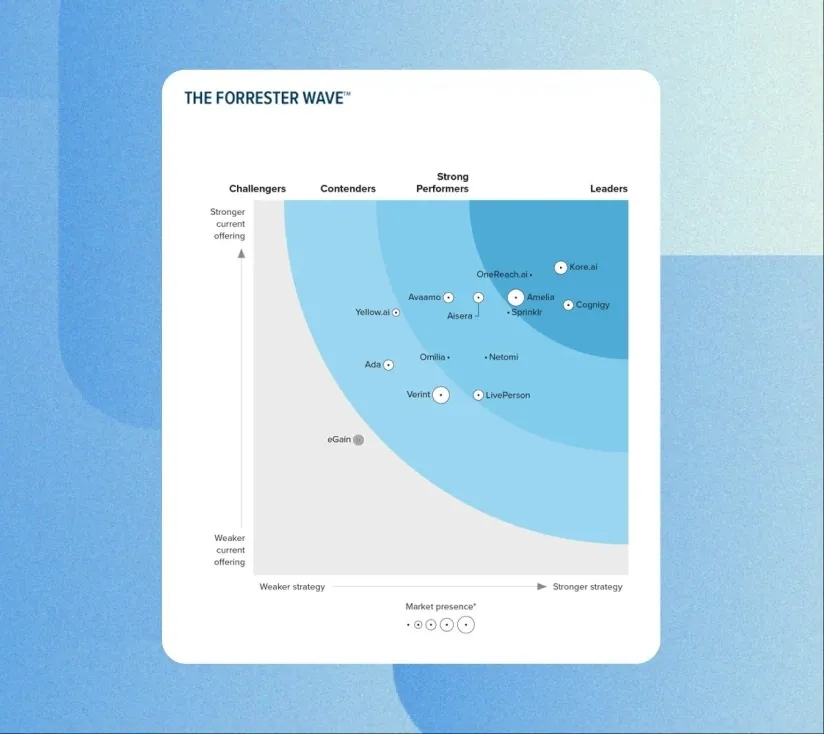
Kore.ai named a leader in The Forrester Wave™: Conversational AI for Customer Service, Q2 2024
Generative AI 101
CXO AI toolkit for enterprise AI success
upcoming event

HumanX is one of the leading global conferences focused on artificial intelligence (AI) — designed for senior leaders, technologists, investors, and decision-makers shaping enterprise deployment of AI technologies.

San Francisco
6 Apr
register
Talk to an expert
Not sure which product is right for you or have questions? Schedule a call with our experts.
Request a Demo
Double click on what's possible with Kore.ai
Sign in
Get in touch
Background Image 1
AI Glossary
Autoregressive model

What is an Autoregressive Model and how does it work?

An autoregressive model is a machine learning technique that predicts the next value in a sequence by learning from the values that came before it. The core idea is simple: what happens next is influenced by what has already happened. By identifying patterns in historical data, the model can make informed predictions about what comes next.

Think of it like predicting tomorrow's weather. Rather than guessing blindly, you look at the past few days of temperature, pressure, and conditions, and use those patterns to estimate what's likely to follow. Autoregressive models do the same thing, but at scale and with mathematical precision, across language, time-series data, and beyond.

At its core, autoregressive modeling is what enables large language models to generate coherent text, forecasting systems to predict demand, and AI applications to produce realistic outputs, one step at a time, each prediction building on the last.

What are the key characteristics of autoregressive models?

  1. Sequential prediction - Autoregressive models predict one output at a time, using previous outputs as inputs for the next prediction. This step-by-step approach allows the model to maintain coherence and context across an entire sequence, whether that sequence is words in a sentence or data points in a time series.
  2. Learning from past values - The model identifies statistical relationships between current and historical values, a property known as autocorrelation. The stronger the correlation between past and present values, the more accurately the model can predict future ones.
  3. Adjustable order - The "order" of an autoregressive model determines how many past values it considers when making a prediction. A higher order means more historical context, which can improve accuracy, though it also increases computational complexity.
  4. Broad applicability - While autoregressive models originated in time-series analysis, they are now central to many generative AI applications. Large language models use autoregressive techniques to predict the next word in a sequence. Image generation models use them to predict the next pixel. The underlying principle remains the same across all these use cases.
  5. Interpretability - Unlike some deep learning approaches, autoregressive models are relatively transparent. The relationship between past inputs and predicted outputs can be examined and understood, making them a practical choice in environments where explainability matters.

Why are autoregressive models important?

Autoregressive models sit at the foundation of many AI capabilities that enterprises rely on today. Every time a large language model generates a response, it is using autoregressive modeling to determine, one token at a time, what word most likely comes next based on everything that preceded it.

Beyond language, businesses use autoregressive techniques to forecast demand, detect anomalies in operational data, predict equipment failure, and model financial risk. In each case, the logic is the same: patterns in historical data contain signals about what is likely to happen next.

As AI systems become more sophisticated, autoregressive modeling continues to underpin the most capable generative models. Understanding it is foundational to understanding how modern AI works and why it produces the outputs it does.

How does agentic AI work?
Explore More

Frequently asked questions

What is the difference between an autoregressive model and a standard regression model?

A standard regression model predicts an outcome based on a set of independent input variables. An autoregressive model uses the previous outputs of the same variable as its inputs, predicting the next value from a sequence of past values rather than from separate external factors.

How are autoregressive models used in large language models?

Large language models use autoregressive modeling to generate text one token at a time. At each step, the model calculates the probability of each possible next word based on all the words that have come before it, then selects the most likely option. This process repeats until the full response is generated.

Are autoregressive models suitable for real-time applications? 

Yes, though the complexity of the model affects response speed. Simpler autoregressive models used in time-series forecasting can run with very low latency. More complex models, such as those powering LLMs, require more compute, which is why infrastructure choices matter for real-time enterprise deployments.

What are the limitations of autoregressive models? 

Autoregressive models work best when there are meaningful patterns in historical data. If a sequence is highly random or the relationship between past and future values is weak, prediction accuracy drops. They can also be computationally intensive at higher orders, and errors made early in a sequence can compound as the model builds on its own previous outputs.

Learn more
Talk to an expert
Share
Link copied
Forrester logo at display.
Kore.ai named a leader in the Forrester Wave™ Cognitive Search Platforms, Q4 2025
Access Report
Gartner logo in display.
Kore.ai named a leader in the Gartner® Magic Quadrant™ for Conversational AI Platforms, 2025
Access Report
Stay in touch with the pace of the AI industry with the latest resources from Kore.ai

Get updates when new insights, blogs, and other resources are published, directly in your inbox.

Subscribe
Thank you! Your submission has been received!
Oops! Something went wrong while submitting the form.

Related Blogs

View all
November 17, 2025
Agentic RAG : A comprehensive guide
November 4, 2025
5 of the most interesting agent use cases
November 19, 2025
Agentic AI evolution
Accelerate time-to-value from AI

Find out how Kore.ai can help

Talk to an expert
Start using an AI agent today

Browse and deploy our pre-built templates

Marketplace
Background Image 4
Background Image 9
You are now leaving Kore.ai’s website.

‍

Kore.ai does not endorse, has not verified, and is not responsible for, any content, views, products, services, or policies of any third-party websites, or for any verification or updates of such websites. Third-party websites may also include "forward-looking statements" which are inherently subject to risks and uncertainties, some of which cannot be predicted or quantified. Actual results could differ materially from those indicated in such forward-looking statements.


Click ‘Continue’ to acknowledge the above and leave Kore.ai’s website. If you don’t want to leave Kore.ai’s website, simply click ‘Back’.

CONTINUEGO BACK
Agentic AI applications for the enterprise
English
Spanish
Spanish
Spanish
Spanish
Pre-Built Applications
BankingHealthcareRetailRecruitingHRIT
Kore.ai agent platform
Platform OverviewMulti-Agent OrchestrationAI Engineering ToolsSearch and Data AIAI Security and GovernanceNo-Code and Pro-Code ToolsIntegrations
 
AI for WorkAI for ServiceAI for ProcessAgent Marketplace
company
About Kore.aiLeadershipCustomer StoriesPartnersAnalyst RecognitionNewsroom
resources
DocumentationBlogWhitepapersWebinarsAI Research ReportsAI GlossaryVideosGenerative AI 101Responsive AI frameworkCXO Toolkit
GET INVOLVED
EventsSupportAcademyCommunityCareers

Let’s work together

Get answers and a customized quote for your projects

Submit RFP
Follow us on
© 2026 Kore.ai Inc. All trademarks are property of their respective owners.
Privacy PolicyTerms of ServiceAcceptable Use PolicyCookie PolicyIntellectual Property Rights
|
×