Training dialog intents to IVA's on Kore.ai AI for service
Last Updated
October 7, 2026

Nick Orlando
Read Time
What’s on this page
“Dialog intents” for an intelligent virtual assistant or chatbot are predefined actions or goals that a virtual assistant can perform in response to user input during a conversation. Intents help the virtual assistant understand the user’s request or question and provide an appropriate response or action.
Intents can be defined and customized based on the specific needs of a virtual assistant and the types of interactions it is designed to handle. The accuracy and effectiveness of intents are crucial for providing a satisfying user experience and achieving the intended goals of the virtual assistant.
Dialog intents for an intelligent virtual assistant in a bank setting could include helping customers open accounts, providing information about loan rates, and helping customers transfer money.
What are dialog intents and how do you train them?
Dialog Intents are the few essential words that describe what the user wants the chatbot to do, usually a verb and a noun such as: ‘Find an ATM’, ‘Create an event’, and similar actions. The more quality data, the better
The process of training Dialog Intents involves training the Machine Learning Engine[MLE] as well as the Fundamental Meaning Engine.[FM]
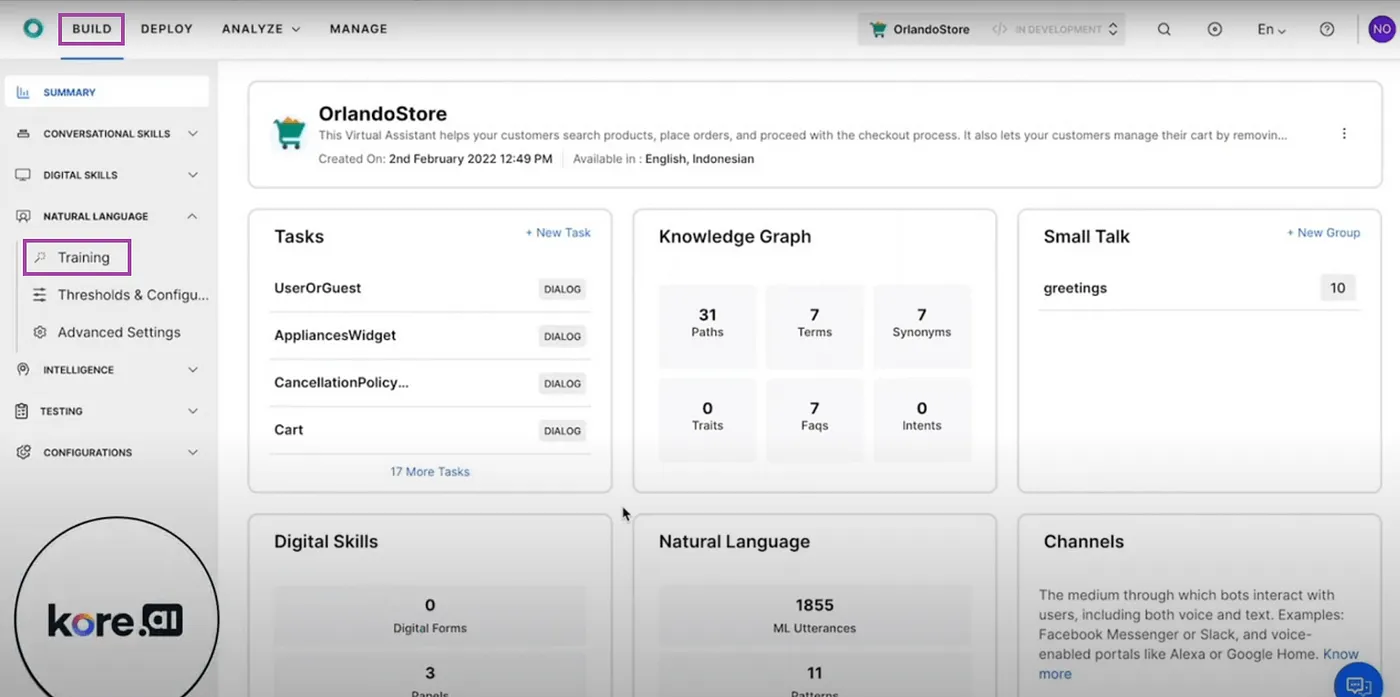
Select Training
Step One
You get started with the Electronics E-commerce Virtual Assistant and then under the natural language tab click into Training. At the top of the screen you can see that there are a few different ways that we can train.
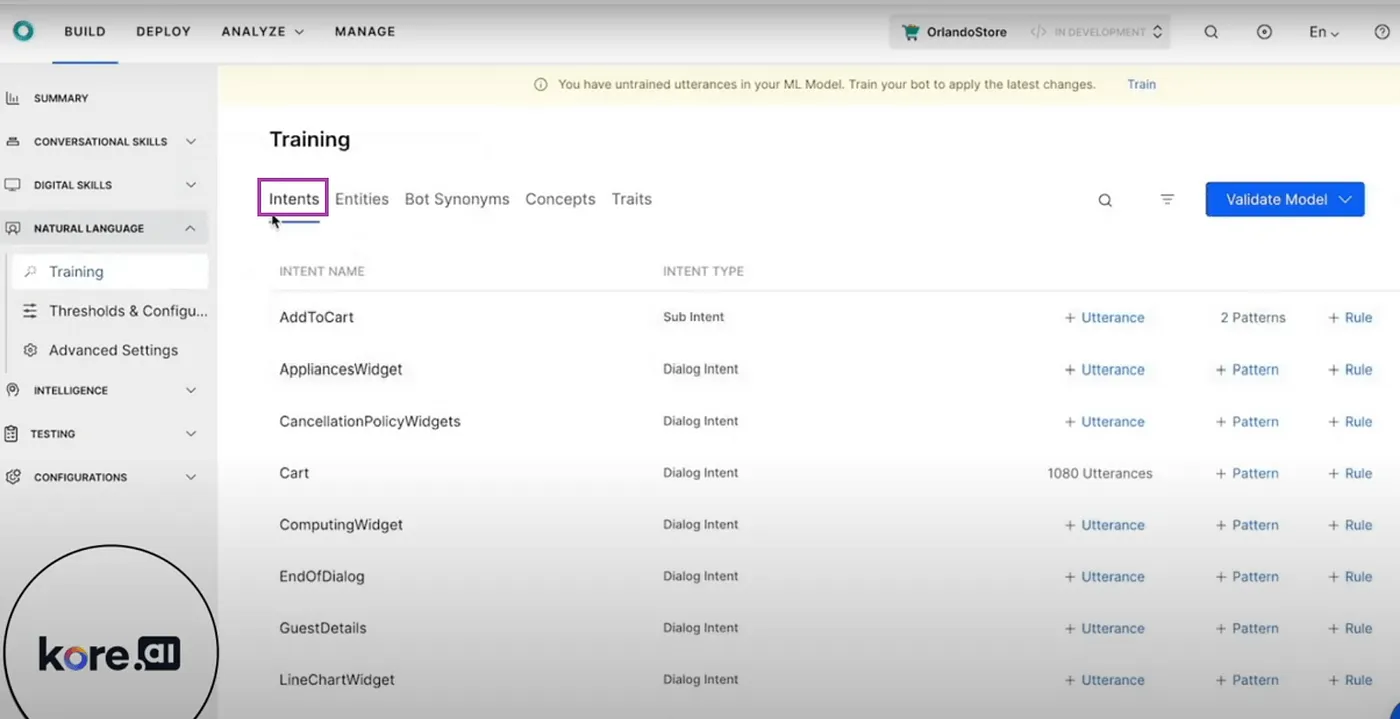
Select the Intents tab to start training. We can then train our intents, our entities, bot synonyms, concepts and traits. The more advanced topics will be covered at a later time.
Step Two
We will start off training the intents by adding utterances — what a customer says or writes — to train our machine learning model. Here, you can imagine you’re trying to describe many different ways of asking the same question.
Step three
We’ll work on the Track Order Intent.
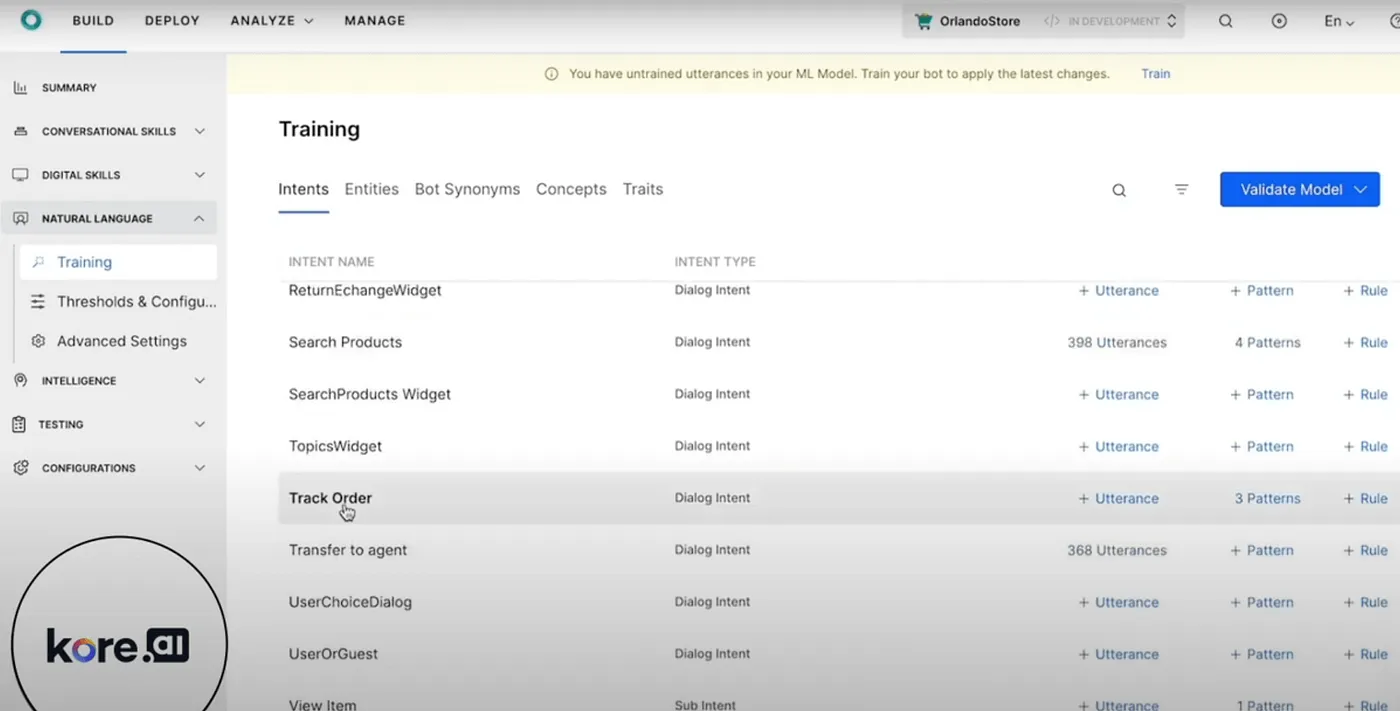
Train on Track Orders. Once you have added all of the utterances, you will train the machine learning model.
As a rule of thumb with machine learning the more quality data the better. One caution: Make sure that you enter diverse data that are most relevant to your topic.
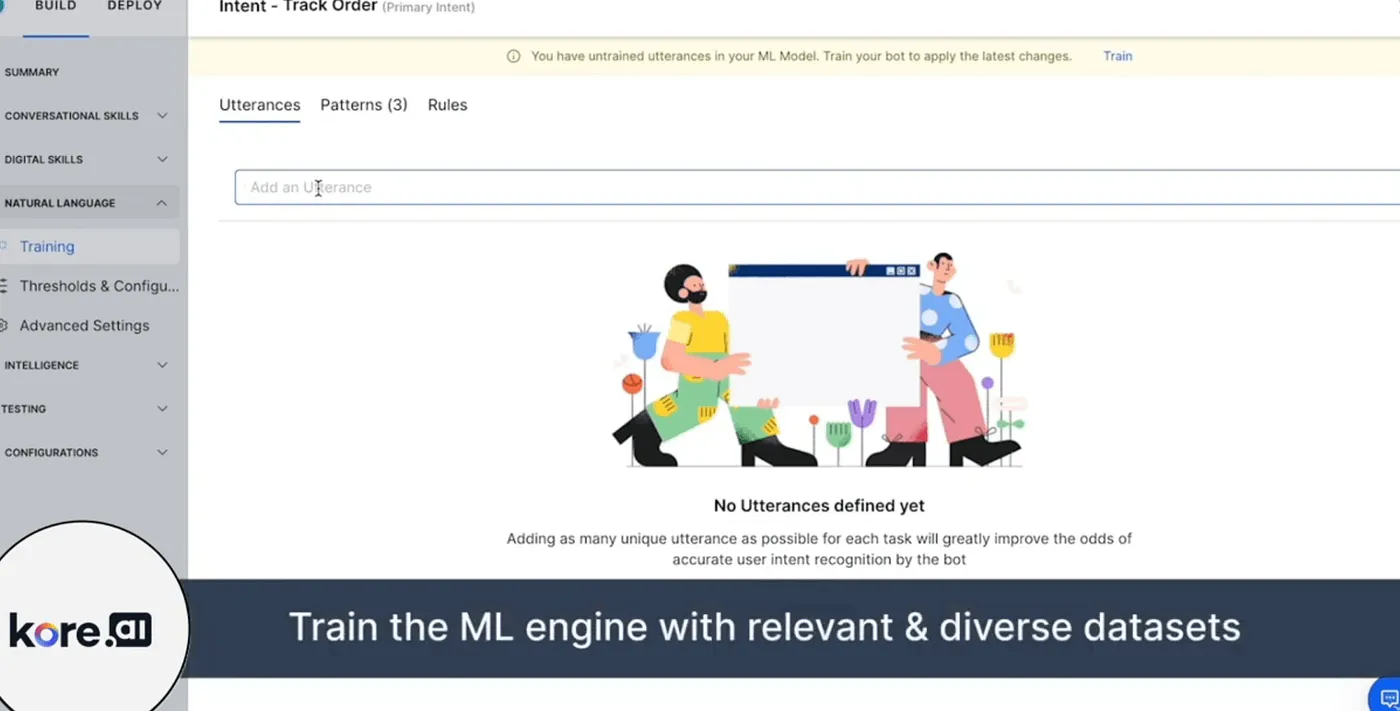
Training the Machine Learning Engine
Diverse data and synonyms
Another important item is Diverse Data, meaning different ways of saying the same thing. In other words — synonyms or similar phrases. One example of how to train intents is tracking an order.
A customer might say, ‘I want to track an order’. They could also say:
‘I need help finding my order’
‘What’s the status of my delivery?’
‘What is the status of my order?’
‘I need help finding information on my order that I recently placed.’
‘Show me my order details’
‘Track order’
The above examples show the many different ways someone might say the same thing. These utterances in the data set help training the ML model to recognize many ways someone could talk about a particular intent.
What is machine learning?
Machine Learning is a subfield of artificial intelligence, made up of a set of algorithms, features, and data sets that continuously improve themselves with experience. As the input grows, the AI platform machine gets better at recognizing patterns and uses it to make predictions.
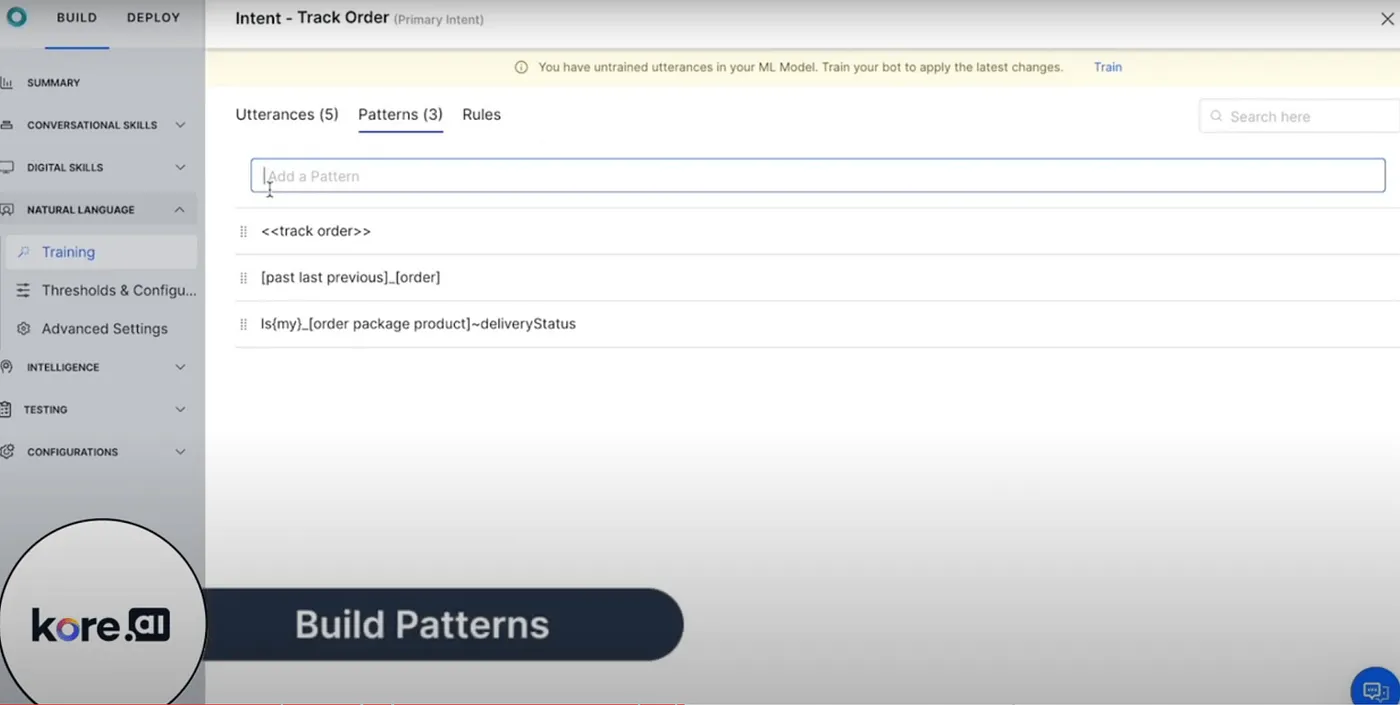
Building patterns
Within the Fundamental Meaning Engine you can build out patterns and rules. Fundamental Meaning is an approach to NLP (Natural Language Processing) that’s all about understanding words themselves. Each user utterance is broken down word-for-word to search for intent (what the user is asking it to do) and entities (the necessary data needed to complete a task).
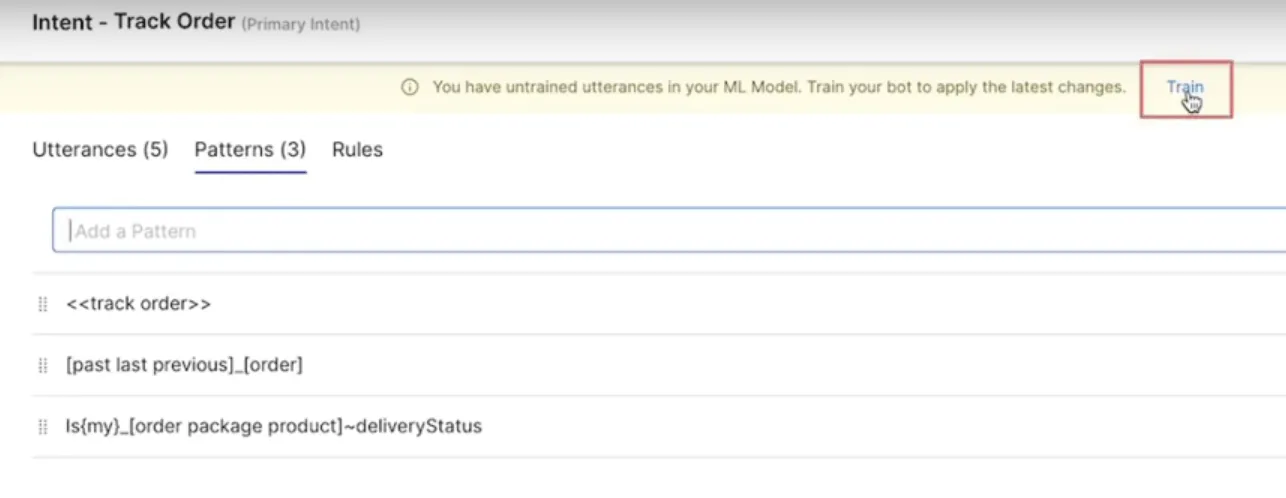
Track order intents
Rules go hand in hand with traits. Again, the more diversity you have in your data set and represent in your traits the better, so the virtual assistant will perform at its best, because of the many variations of how someone can speak.
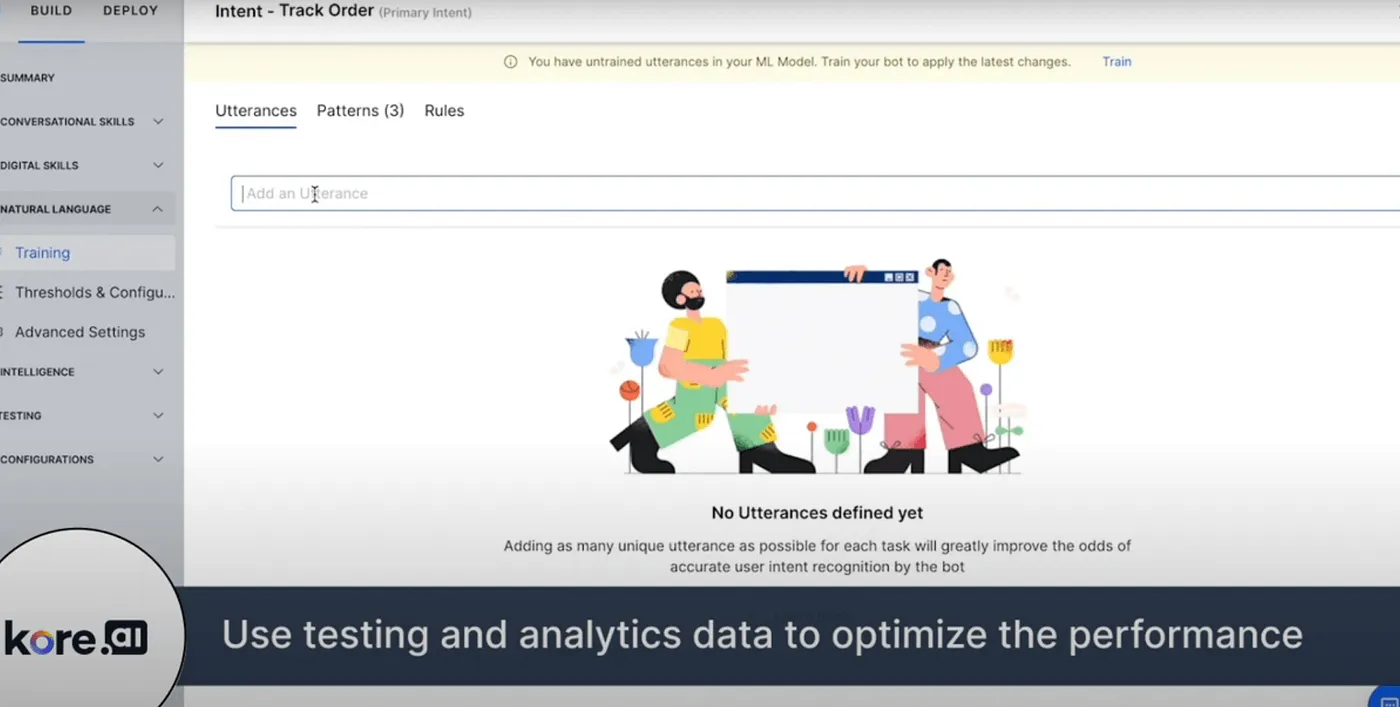
Using testing and analytics data
With both the Kore.ai testing suite as well as Kore.ai analytics in your training suite, you can use them to retrain the model or make it more intelligent over time.
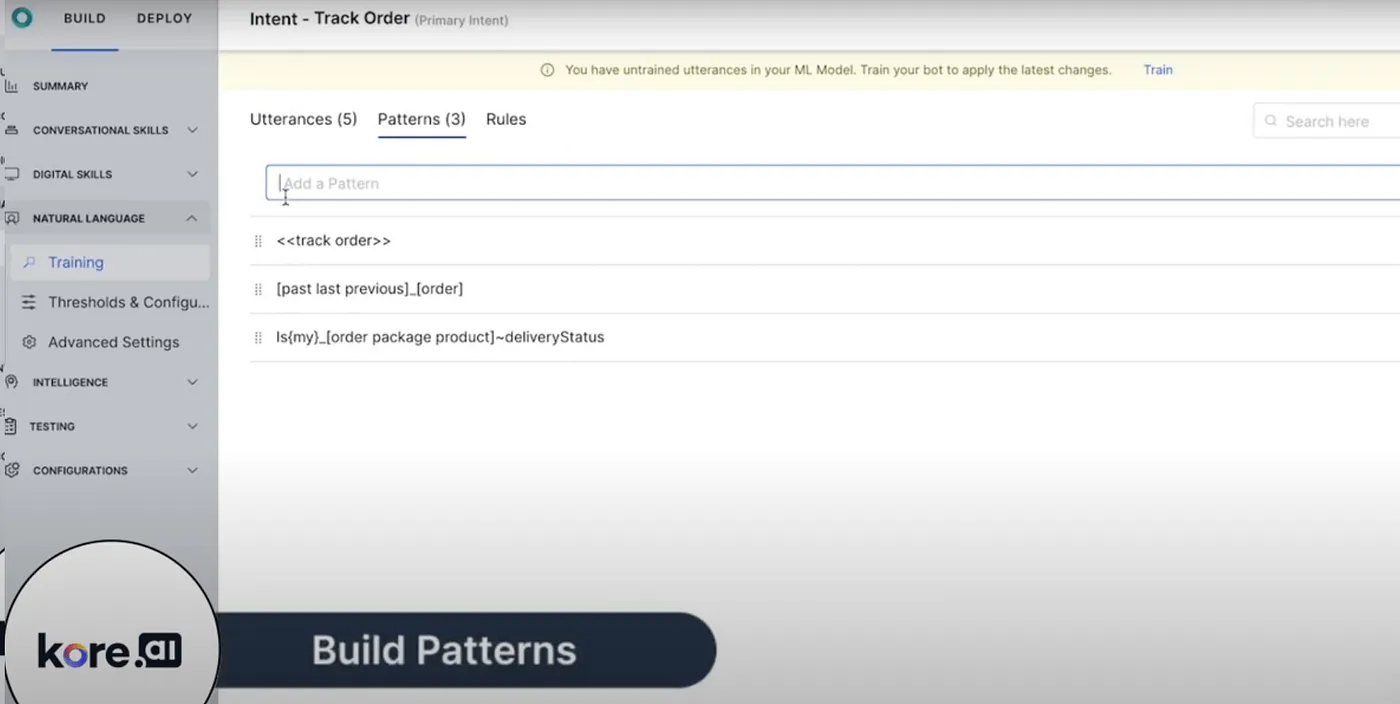
Build patterns within intents
Add a couple of utterances just so that you make sure the virtual assistant is being trained to understand things about tracking an order such as
‘I would like to track my order’ and recognize patterns. You can read more about this in the Kore.ai Developer Documentation. In our example ‘delivery status’ represents a concept, so this pattern is going to be using the concept of ‘delivery status’. To train the ML Model press the ‘Train’ button. Training could take a couple seconds, perhaps a few minutes. The more robust and the more data that you’re training your ML Models on the more time it takes. However, Kore.ai has made it very efficient and it never takes too long.
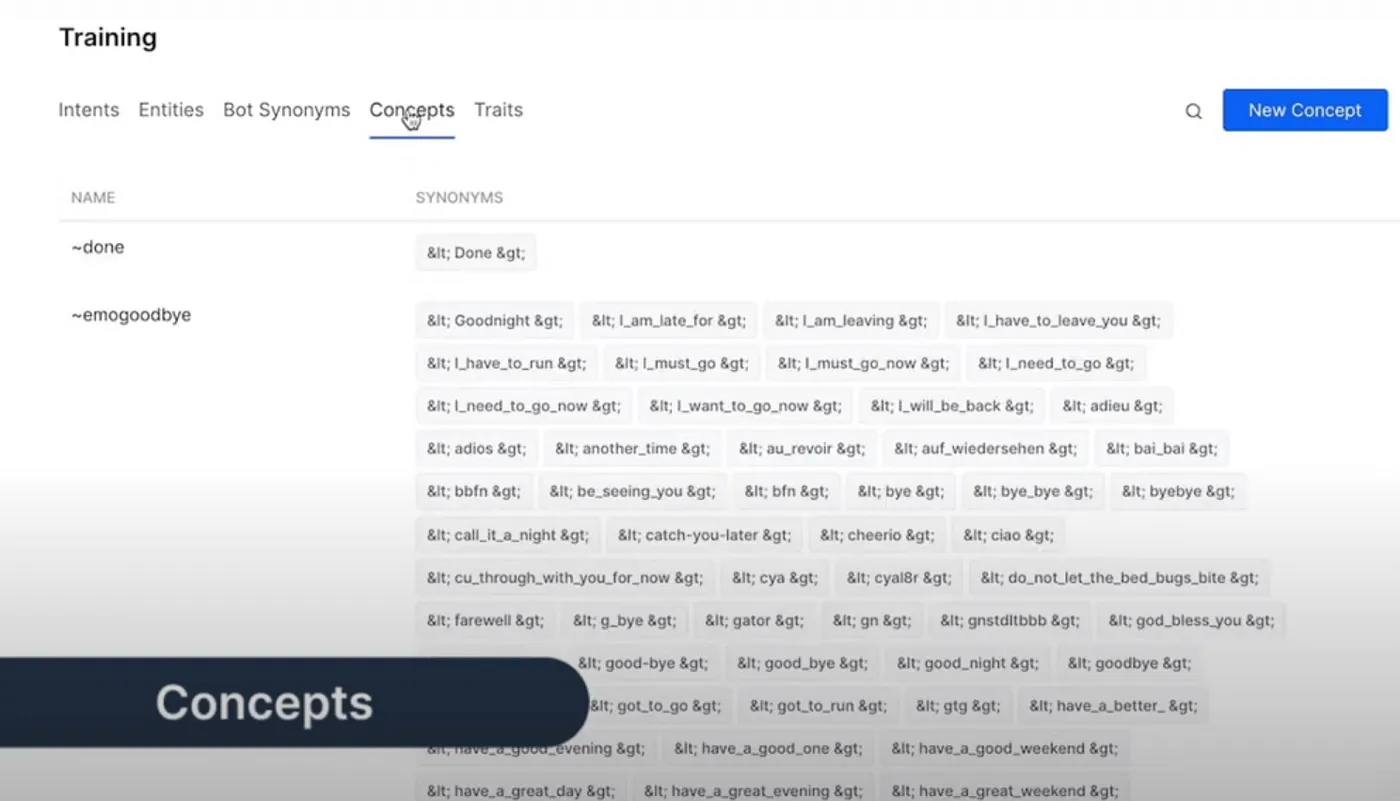
Training concepts

Track order intent training complete
Entities, synonyms and concepts
With the training complete you should have some understanding of tracking an order and you can test that out. Part of defining a concept is understanding Entities, Bot Synonyms and Concepts.
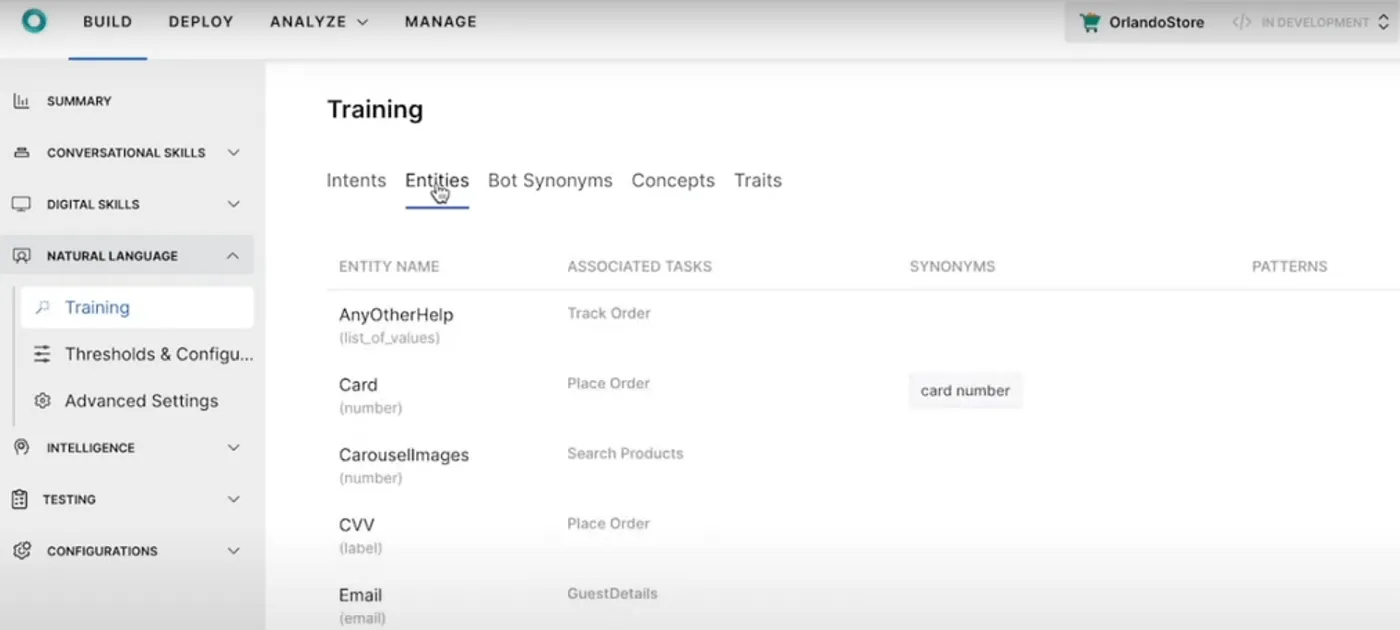
Training entities
Entities are things that can be extracted from a user’s utterance such as a telephone number, a payment method, or a person’s name on a credit or debit card. Entities are any information that can be helpful in executing an action or gathering the correct information for that user. They help provide context to the virtual assistant so it understands exactly what the user is trying to accomplish. Bot Synonyms are similar.
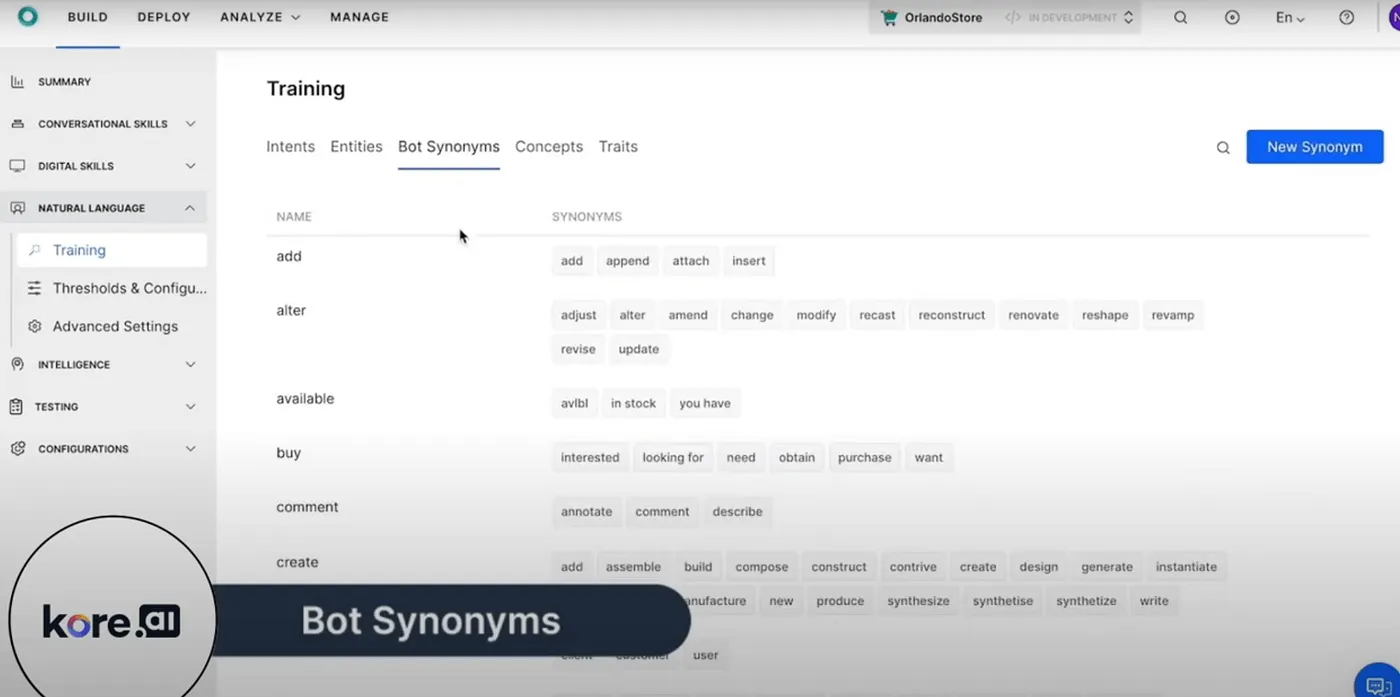
Training bot synonyms
With all of the different words that may be occurring, what we want to do is find synonyms so that there are different ways that we can talk about the same thing.
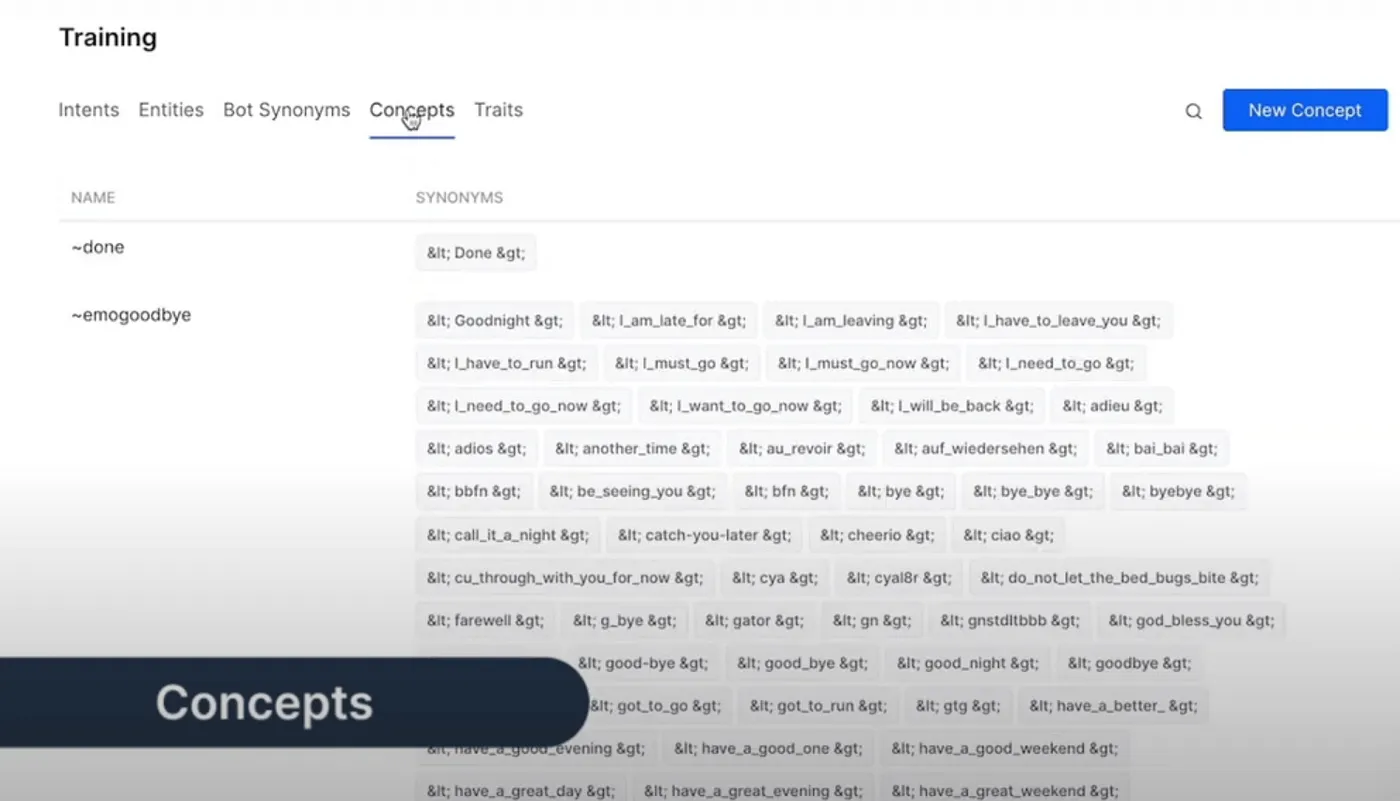
Training bot synonyms
Concepts represent ideas such as ‘Hello’ or ‘Goodbye’ and that could represent different ways of saying hello and different ways of saying goodbye. These are clusters of related words and synonymous terms that can be considered a group.
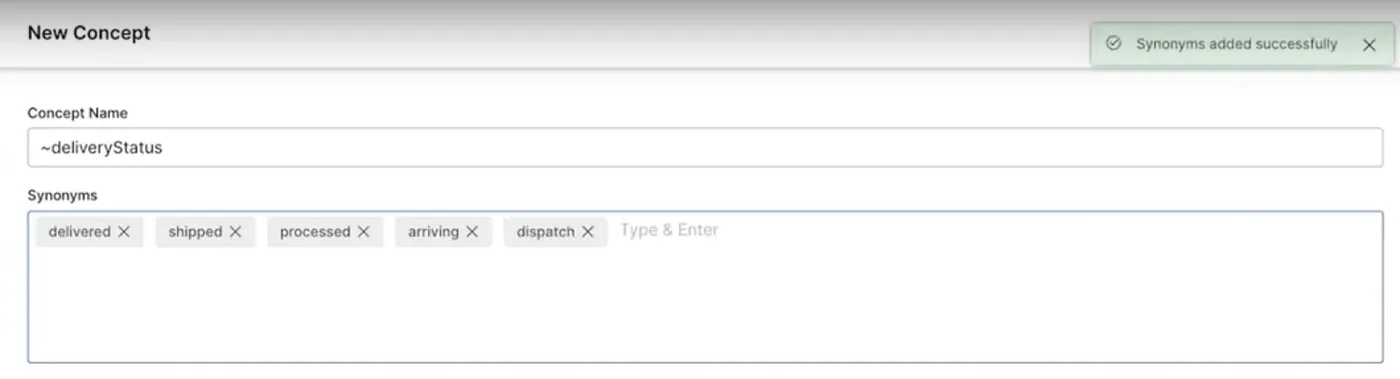
New concepts and synonyms
In our theoretical case a new concept could be ‘Delivery Status’. Now that the concept pattern is defined, the next step is to name the concept. Adding different synonyms for delivery status could include ‘Shipped’, ‘Processed’, ‘Arriving’ and maybe something like ‘Dispatch’.
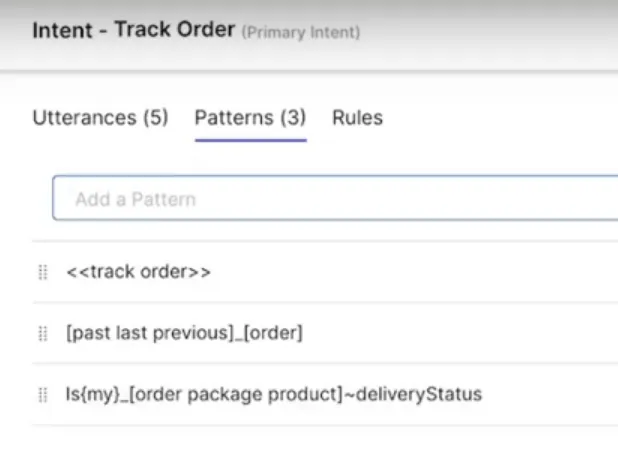
Intent patterns - track order
With the synonyms built out you can see under ‘Delivery Status’ all of the synonyms that can be used for this concept.
Now you can test out the intelligence you just built in your virtual assistant to modify the ML models and FM engine to optimize the experience and understanding.
This is a quick introduction on how to train Dialogue Intents both on the machine learning side as well as on the fundamental meaning side. You can read more about Dialog Intents and the Dialog Builder in the Kore.ai Developer Documentation.
The Kore.ai web site is full of information, videos, tutorials, white papers and more about the Kore.ai XO Platform.
About us
Kore.ai is the leader in conversational AI platforms and solutions, helping enterprises automate front and back-office business interactions to deliver extraordinary experiences for their customers, agents, and employees on voice and digital channels.
Share
Tags