Agentic AI Apps
AI Solutions
Pre-built Applications

Ready-to-deploy applications across industries and functions.

AI for Banking
AI for Healthcare
AI for Retail
AI for IT
AI for HR
AI for Recruiting
Application Accelerators

Leverage pre-built AI agents, templates, and integrations from the Kore.ai Marketplace.

Kore.ai Marketplace
Pre-built agents
Templates
Integrations
Tailored Applications

Design and build applications on our Agent Platform using our enteprise modules.

Platform
Agent Platform

Your strategic enabler for enterprise AI transformation.

Learn more
Enterprise Modules
AI for Work
AI for Service
AI for Process
Top Resources
Scaling AI: practical insights
from AI leaders
AI use cases: insights from AI's leading decision makers
Beyond AI islands: how to fully build an enterwise-wide AI workforce
QUICK LINKS
About Kore.aiCustomer StoriesPartnersResourcesBlogWhitepapersDocumentationAnalyst RecognitionGet supportCommunityAcademyCareersContact Us
Agent Platform
Agent Platform
Agent Platform

Your strategic enabler for enterprise AI transformation.

learn more
PLATFORM MODULES
Multi-Agent Orchestration
AI Engineering Tools
Search + Data AI
AI Security + Governance
No-Code + Pro-Code Tools
Observability
Integrations
Enterprise Modules
For Service
AI AgentsAgent AI AssistanceAgentic Contact CenterQuality AssuranceProactive Outreach
For Work
Modules
Enterprise SearchIntelligent OrchestratorPre-Built AI AgentsAdmin ControlsAI Agent Builder
Departments
SalesMarketingEngineeringLegalFinance
For Process
Process AutomationAI Analytics + MonitoringPre-built Process Templates
upcoming event

Join the first generation of leaders who are designing, governing, and leading the truly intelligent organization.

Orlando
12 May
register
Recent AI Insights
What's new in AI for Work: features that drive enterprise productivity
AI INSIGHT
20 Feb 2026
Parallel Agent Processing
AI INSIGHT
16 Jan 2026
The AI productivity paradox: why employees are moving faster than enterprises
AI INSIGHT
12 Jan 2026
Agent Marketplace
More
More
Resources
Resource Hub
Blog
Whitepapers
Webinars
AI Research Reports
AI Glossary
Videos
AI Pulse
Generative AI 101
Responsive AI Framework
CXO Toolkit
Private equity
support
Documentation
Get support
Submit RFP
Academy
Community
COMPANY
About us
Leadership
Customer Stories
Partners
Analyst Recognition
Newsroom
Events
Careers
Contact us
Agentic AI Guides
forrester cx wave 2024 Kore at top
Kore.ai named a leader in The Forrester Wave™: Conversational AI for Customer Service, Q2 2024
Generative AI 101
CXO AI toolkit for enterprise AI success
upcoming event

Join the first generation of leaders who are designing, governing, and leading the truly intelligent organization.

Orlando
12 May
register
Talk to an expert
Not sure which product is right for you or have questions? Schedule a call with our experts.
Request a Demo
Double click on what's possible with Kore.ai
Sign in
Get in touch
Background Image 1
Blog
Conversational AI
Contrastive Chain-Of-Thought prompting

Contrastive Chain-Of-Thought prompting

Published Date:
February 3, 2025
Last Updated ON:
February 18, 2026

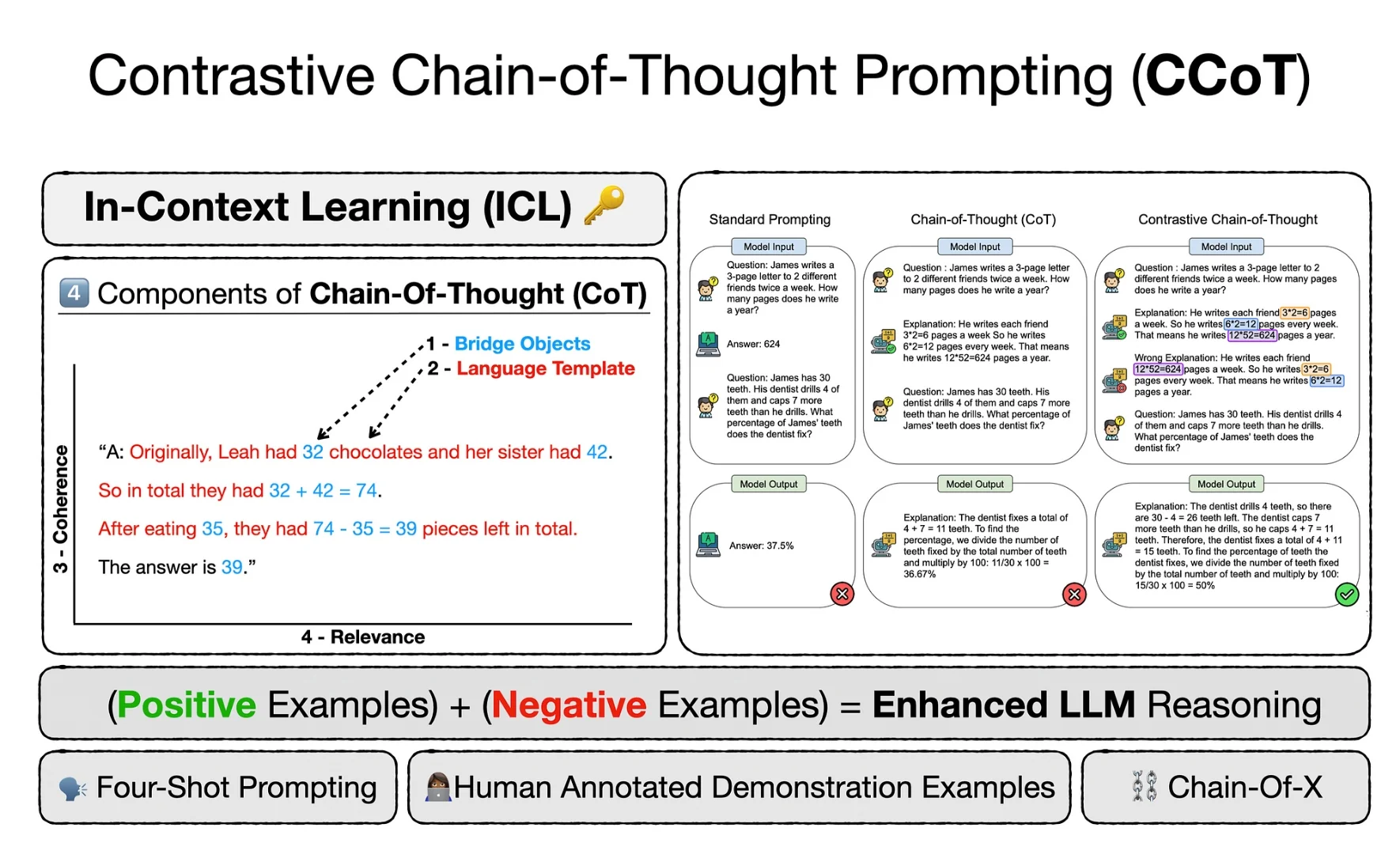
Contrastive Chain-of-Thought Prompting (CCoT) uses both positive & negative demonstrations to improve LLM reasoning.

Introduction to Chain-of-Thought (COT)

Of Late there has been a number of Chain-Of-X illustrating how Large Language Models (LLMs) are capable of decomposing complex problems into a series of intermediate steps.

This lead to a phenomenon which some call Chain-Of-X.

This basic principle was first introduced by the concept of Chain-Of-Thought(CoT) prompting…

The basic premise of CoT prompting is to mirror human problem-solving methods, where we as humans decompose larger problems into smaller steps.

The LLM then addresses each sub-problem with focussed attention hence reducing the likelihood of overlooking crucial details or making wrong assumptions.

The Chain-Of-X approach is very successful in interacting with LLMs.
CCoT prompting
CCoT Walkthrough

CoT vs CCoT

An interesting element of CoT was the relatively low impact of using invalid demonstrators; and by implication wrong assumptions during the intermediate reasoning steps are propagated down the chain.

Chain-Of-X approaches do not illustrate behaviour, but only supply correct examples for the LLM to follow.

Considering this, Contrastive Chain-Of-Thought (CCoT) is focussed on supplying both positive and negative examples in an effort to enhance the model’s reasoning capability.

This study is again proof of the importance of In-Context Learning (ICL) for LLMs.

This approach is very much in keeping with the emerging understanding on how important In-Context Learning (ICL) is for LLMs.

CCoT

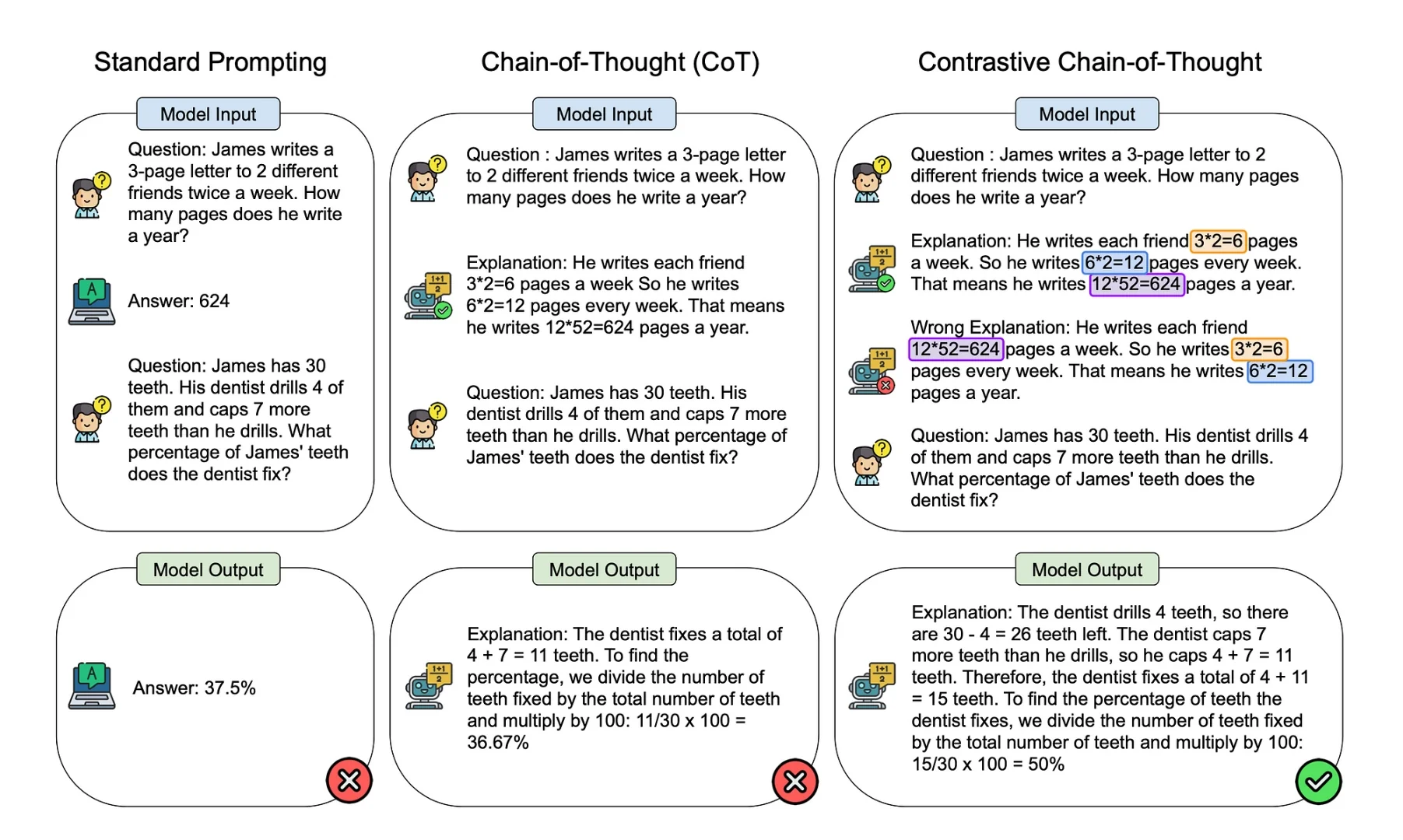
CCoT uses both valid and invalid reasoning demonstrations which are presented to the LLM at inference.

The model does not know what faults to avoid in conventional CoT, which could lead to increased mistakes and error propagation.

CCoT provides both the correct and incorrect reasoning steps in the demonstration examples.

More On CCoT

  1. Contrasting positive and negative examples increase the effectiveness of the CoT approach.
  2. An automated method needs to be developed to create the positive and negative demonstrations. Which is premised on human annotated data with correct and fitting incorrect data.
  3. The improvement of CCoT compared to traditional CoT approaches comes with the added burden of developing a structure for prompt creation.

Traditional CoT consist of two elements, Bridging & Language Templates.

Bridging

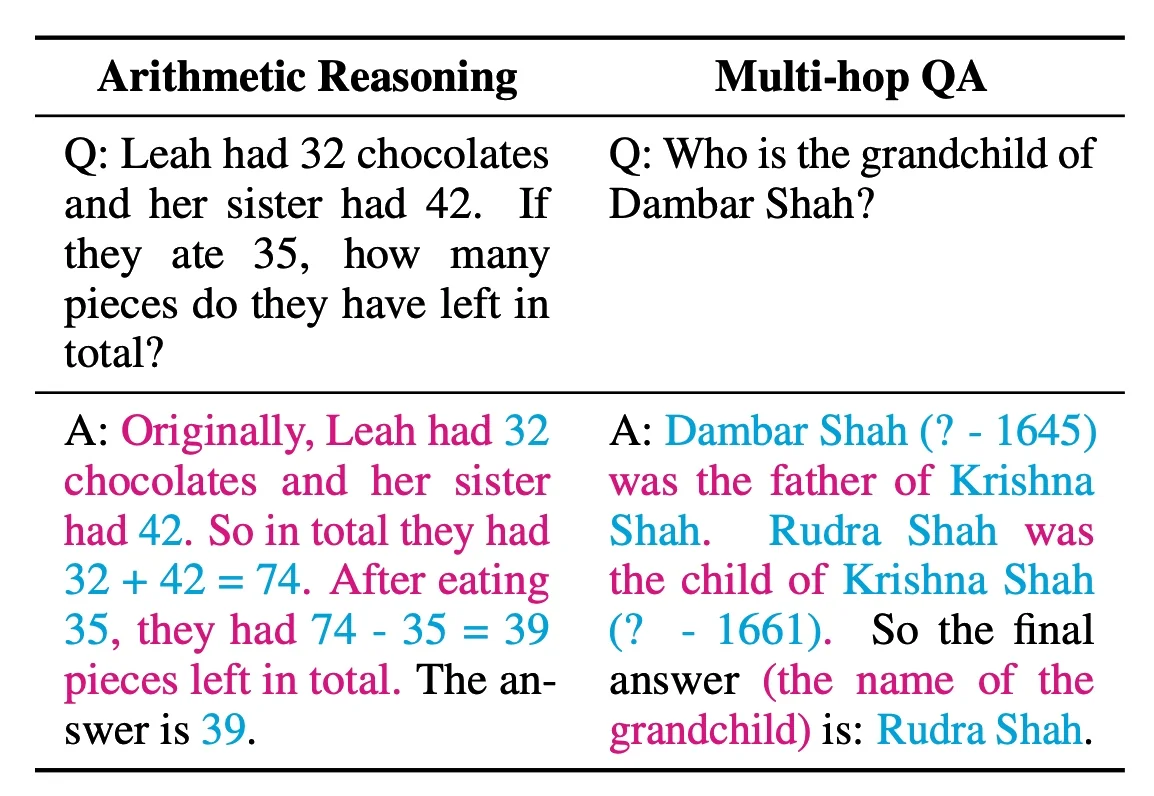
Bridging refers to symbolic items which the model traverses to reach a final conclusion. Bridging can be made up of numbers and equations for arithmetic tasks, or the names of entities in factual tasks.

Language Templates

Language templates are the textual hints that guide the language model to derive and contextualise the correct bridging objects during the reasoning process.
Language template
Language Template

Above is a practical example of Bridging Objects (blue) and Language Templates (red) for creating Chain-of-Thought rationale.

Coherence refers to the correct ordering of steps in a rationale, and is necessary for successful chain of thought. Specifically, as chain of thought is a sequential reasoning process, it is not possible for later steps to be pre- conditions of earlier steps.

Relevance refers to whether the rationale contains corresponding information from the question. For instance, if the question mentions a person named Leah eating chocolates, it would be irrelevant to discuss a different person cutting their hair.
Optimal model output
CCoT model Output

Considering the image above, here you see input and output examples comparing Standard Prompting, Chain-Of-Thought (CoT) prompting and Contrastive Chain-Of-Thought (CCoT) prompting.

Introducing Complexity

In the recent past there was an allure of the simplicity of LLM implementations and LLMs were thought to have emerging capabilities just waiting to be discovered and leveraged.

A single very well formed meta-prompt was seen as all you needed to build an application. This mirage is disappearing and the reality is dawning that, as flexibility is needed, complexity needs to be introduced.

The study also introduces an automated method of constructing contrasting demonstrations. An automated process premised on human annotated data.

This is also in keeping with the current trend of complexity of LLM based interactions increasing as the demand for flexibility and application resilience increase.

Contrastive chain of thought can serve as a general enhancement of chain-of-thought prompting.

In Conclusion, Data

Recent studies are showing the importance of a data centric approach to LLM implementations.

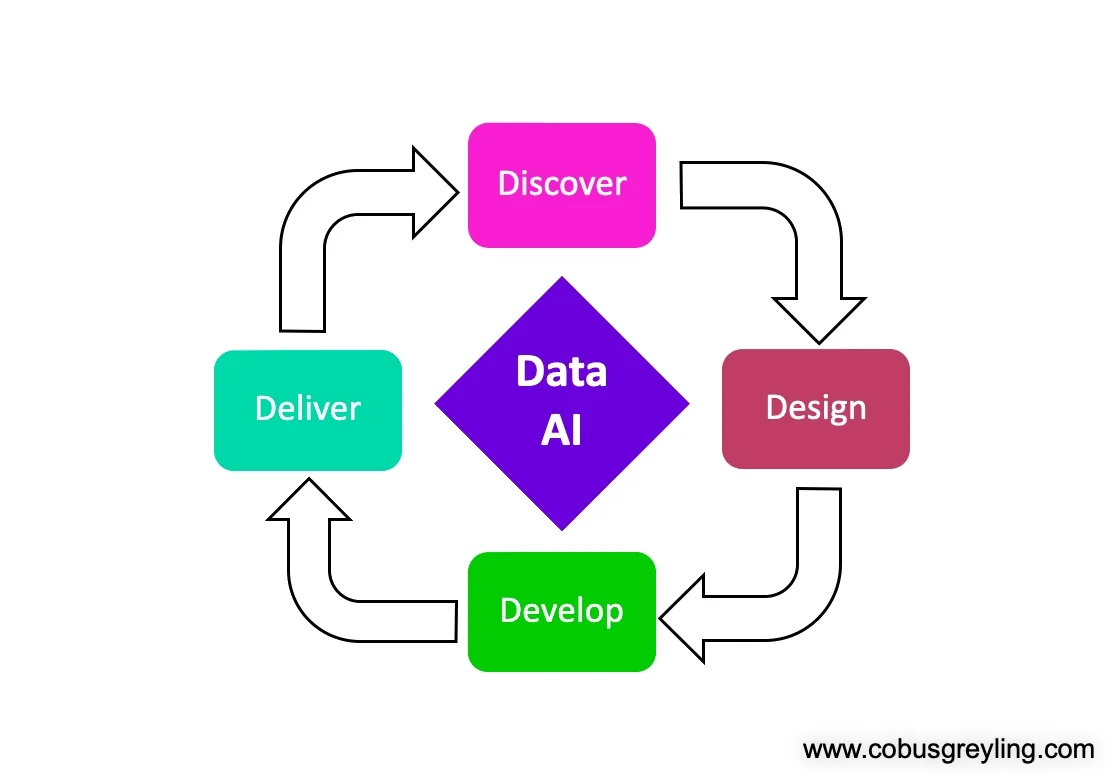
Data to be injected at inference time needs to be highly contextual, factually correct and succinct. These requirements necessitates a process of data discovery, data design, data development (augmented existing training data) and a method to deliver the data.

Data Discovery demands data inspectability and observation.

Data Design is formatting the data in the correct format, and ensuring the data contents is accurate and correct.

Data Development is the augmentation of data to the optimal volumes and training sets sizes.

Data Delivery are performed via gradient and gradient-free methods, at inference or prior via a custom fine-tuning model; or both.
4Ds of data
Data Essentials

                                                                                                                                                               Find the full study here.

Share
Link copied
authors
Cobus Greyling
Cobus Greyling
Chief Evangelist
Forrester logo at display.
Kore.ai named a leader in the Forrester Wave™ Cognitive Search Platforms, Q4 2025
Access Report
Gartner logo in display.
Kore.ai named a leader in the Gartner® Magic Quadrant™ for Conversational AI Platforms, 2025
Access Report
Stay in touch with the pace of the AI industry with the latest resources from Kore.ai

Get updates when new insights, blogs, and other resources are published, directly in your inbox.

Subscribe
Thank you! Your submission has been received!
Oops! Something went wrong while submitting the form.

Recent Blogs

View all
AI agents in retail: 12 proven use cases & examples (2026)
March 5, 2026
AI agents in retail: 12 proven use cases & examples (2026)
The end of manual AP: Zero-Touch invoice processing with AI for Process
February 20, 2026
The end of manual AP: Zero-Touch invoice processing with AI for Process
AI Agent governance: A practical guide to risk, trust, and compliance
February 20, 2026
AI Agent governance: A practical guide to risk, trust, and compliance
Accelerate time-to-value from AI

Find out how Kore.ai can help

Talk to an expert
Start using an AI agent today

Browse and deploy our pre-built templates

Marketplace
Background Image 4
Background Image 9
You are now leaving Kore.ai’s website.

‍

Kore.ai does not endorse, has not verified, and is not responsible for, any content, views, products, services, or policies of any third-party websites, or for any verification or updates of such websites. Third-party websites may also include "forward-looking statements" which are inherently subject to risks and uncertainties, some of which cannot be predicted or quantified. Actual results could differ materially from those indicated in such forward-looking statements.


Click ‘Continue’ to acknowledge the above and leave Kore.ai’s website. If you don’t want to leave Kore.ai’s website, simply click ‘Back’.

CONTINUEGO BACK
Agentic AI applications for the enterprise
English
Spanish
Spanish
Spanish
Spanish
Pre-Built Applications
BankingHealthcareRetailRecruitingHRIT
Kore.ai agent platform
Platform OverviewMulti-Agent OrchestrationAI Engineering ToolsSearch and Data AIAI Security and GovernanceNo-Code and Pro-Code ToolsIntegrations
 
AI for WorkAI for ServiceAI for ProcessAgent Marketplace
company
About Kore.aiLeadershipCustomer StoriesPartnersAnalyst RecognitionNewsroom
resources
DocumentationBlogWhitepapersWebinarsAI Research ReportsAI GlossaryVideosGenerative AI 101Responsive AI frameworkCXO Toolkit
GET INVOLVED
EventsSupportAcademyCommunityCareers

Let’s work together

Get answers and a customized quote for your projects

Submit RFP
Follow us on
© 2026 Kore.ai Inc. All trademarks are property of their respective owners.
Privacy PolicyTerms of ServiceAcceptable Use PolicyCookie PolicyIntellectual Property Rights
|
×