






.webp)
What is an agent planner, and why is it important?
An agent planner is the decision-making layer in an AI system that determines how a goal should be achieved before any action is taken. Rather than executing tasks directly, the planner focuses on designing a logical path from the current situation to the desired outcome.
It evaluates the current context, anticipates possible future states, and maps out a sequence of actions that move the system closer to its objective.
What are the key characteristics of an agent planner?
An agent planner comes with several critical capabilities that keep agentic systems running smoothly:
- Goal-driven reasoning: Agent planners are designed around outcomes. They break down high-level objectives into smaller, achievable steps, making complex problems easier to manage and execute.
- Adaptive decision-making: Rather than following a fixed path, planners adjust their strategies as priorities shift or new data appear. This flexibility allows AI systems to respond intelligently to change without starting over.
- Structured planning logic: Planner agents use structured planning methods to evaluate options, assess constraints, and optimize execution. This ensures plans are not only achievable but efficient and aligned with system goals.
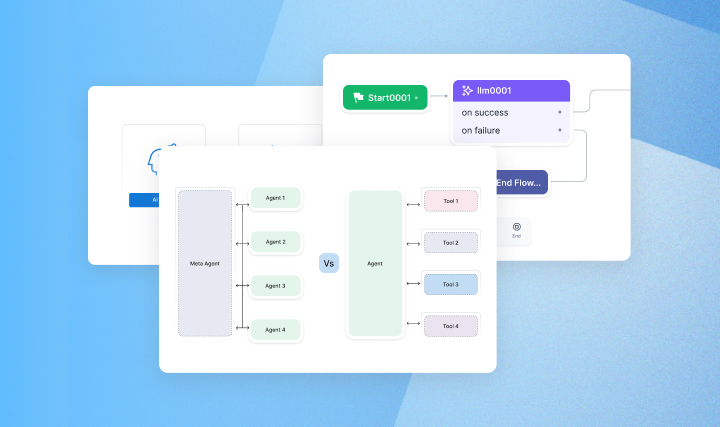
- Support for multi-agent environments: In systems with multiple agents or tools, the planner provides a shared plan that keeps actions coordinated and prevents duplicated or conflicting effort.
Why is an agent planner important in an agentic system?
As AI systems handle end-to-end processes, planning becomes essential. Without a planning layer, systems risk acting impulsively, repeating work, or failing to account for dependencies.
Agent planners introduce clarity and predictability. They transform abstract requests into structured action paths, making AI behaviour easier to understand, monitor, and trust. This is especially important in enterprise environments, where reliability and transparency matter as much as intelligence.
How does an agent planner work?
When given a goal, an agent planner defines what success looks like, identifies required steps, accounts for dependencies, and determines execution order.
It continuously reassesses the plan as conditions change. If new information appears or a task fails, it updates the plan to stay aligned with the goal.
Planner agents may use established planning techniques to model decisions and constraints, translating intent into structured plans that other agents or systems can execute.
Watch Agent Planner working in action!
Want to learn how the agent planner works in real-world scenarios? Head to our Resource Section.