





.webp)
What is an agent orchestrator and why is it needed?
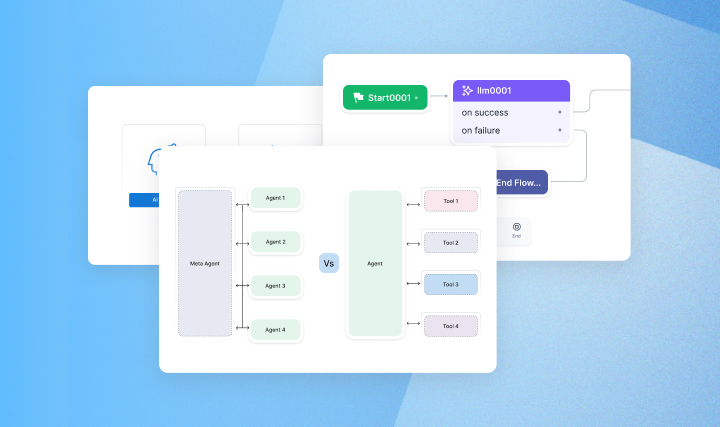
An agent orchestrator acts as a coordinator that brings multiple AI agents together and makes them work as a single, intelligent system. Rather than relying on a single agent, the orchestrator ensures the right agent handles the appropriate task at the right moment.
Think of the orchestrator as the conductor of an AI orchestra. Each agent has a specific role, such as analyzing data, interacting with users, calling APIs, or executing actions. It's the orchestrator that ensures they perform in harmony. It dynamically assigns tasks based on goals, context, and system state, while preventing conflicts and keeping workflows on track.
At its core, the orchestrator acts as the control layer for complex AI workflows. It decides execution order, manages dependencies, handles retries or failures, and determines when a workflow should progress, pause, or stop altogether. This coordination turns individual AI agents into reliable, enterprise-ready systems capable of executing complex workflows across tools, data sources, and business processes.
What are the key features of an agent orchestrator?
An agent orchestrator oversees several critical capabilities that keep multi-agent systems running smoothly:
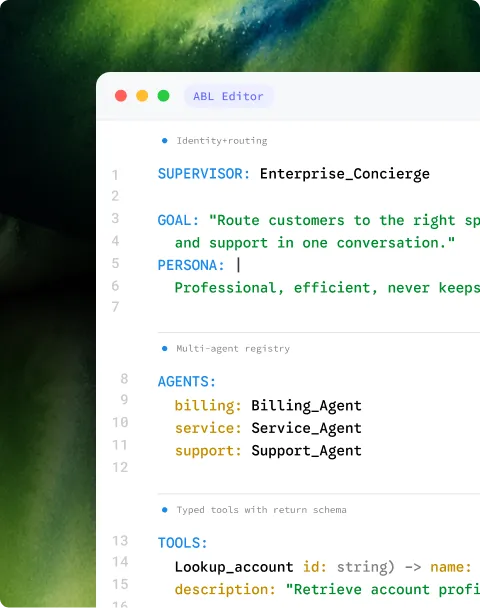
- Task delegation and coordination : The orchestrator assigns work to specialized agents using predefined rules, real-time signals, and workload awareness. In a customer service scenario, for example, it can determine whether an inquiry should be handled by a billing agent, a technical support agent, or both, without human intervention.
- Workflow management : Complex goals are broken down into smaller, manageable steps. The orchestrator assigns each step to the appropriate agent, tracks progress, and manages dependencies so tasks execute in the correct sequence. This ensures even multi-layered workflows run smoothly from start to finish.
- Integration with enterprise systems : An agent orchestrator connects seamlessly with APIs, business systems, external tools, and other agents. This allows AI workflows to operate across platforms, pulling in data and triggering actions wherever needed.
- Real-time context management : A shared, up-to-date context is maintained across agents. This ensures all agents operate from the same information, reducing duplication, improving accuracy, and keeping decisions aligned throughout the workflow.
- Continuous optimization : Orchestrators monitor agent performance, identify inefficiencies, and adapt workflows automatically. This means organizations can refine orchestration strategies, retrain models, and continuously improve outcomes over time.
Why is AI agent orchestration needed?
As AI systems take on larger, end-to-end workflows, coordination becomes essential. Orchestration bridges the gap between what individual agents can do and what real production systems demand.
Single agents excel at focused tasks, but struggle when work spans multiple steps, tools, or decisions. Without coordination, context fragments and actions become disconnected.
Sequencing issues are another challenge. When tasks execute too early or out of order, even small timing errors can disrupt entire workflows. Orchestration enforces structure and order. Failures are also inevitable in complex systems. An orchestrator introduces controlled retries, fallbacks, and recovery paths, rather than leaving workflows stranded mid-execution.