



Agent Platform { Artemis }
Agent Platform
Agent Platform { Artemis }
NEW

The AI-programmable foundation for building, scaling, and optimizing AI agents that work in production.

learn more
Enterprise Modules
For Service
AI AgentsAgent AI AssistanceAgentic Contact CenterQuality AssuranceProactive Outreach
For Work
Modules
Enterprise SearchIntelligent OrchestratorPre-Built AI AgentsAdmin ControlsAI Agent Builder
Departments
SalesMarketingEngineeringLegalFinance
Explore
Usecase Library

Find the right AI use case for your business

Recent AI Insights
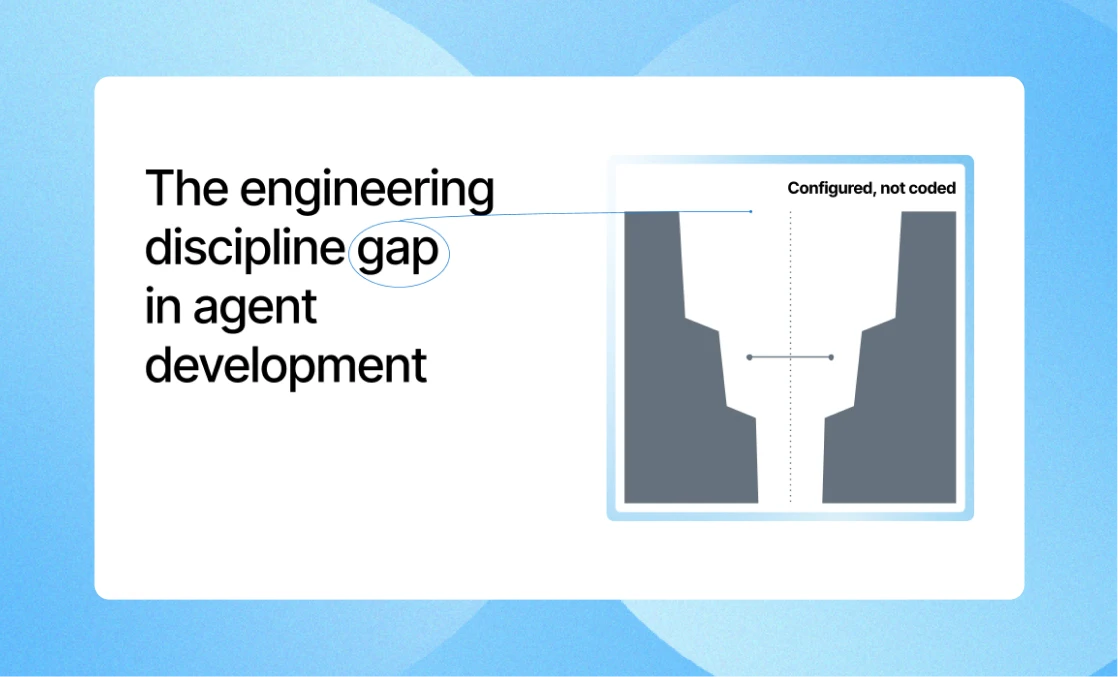
Configured, not coded. The engineering discipline gap in agent development
AI INSIGHT
15 May 2026
Can Today’s AI Agents Survive Their Own Runtime?
AI INSIGHT
15 May 2026
What's new in AI for Work: features that drive enterprise productivity
AI INSIGHT
20 Feb 2026
Parallel Agent Processing
AI INSIGHT
16 Jan 2026
Agentic AI Apps
AI Solutions
Pre-built Applications

Ready-to-deploy applications across industries and functions.

AI for Banking
AI for Healthcare
AI for Retail
AI for IT
AI for HR
AI for Recruiting
Application Accelerators

Leverage pre-built AI agents, templates, and integrations from the Kore.ai Marketplace.

Kore.ai Marketplace
Pre-built agents
Templates
Integrations
Tailored Applications

Design and build applications on our Agent Platform using our enterprise modules.

Platform
Agent Platform

Your strategic enabler for enterprise AI transformation.

Learn more
Enterprise Modules
AI for Work
AI for Service
Top Resources
From search to action: what makes agentic AI work in practice
AI use cases: insights from AI's leading decision makers
Beyond AI islands: how to fully build an enterwise-wide AI workforce
QUICK LINKS
About Kore.aiCustomer StoriesPartnersResourcesBlogWhitepapersDocumentationAnalyst RecognitionGet supportCommunityAcademyCareersContact Us
Agent Marketplace
More
More
Resources
Resource Hub
Blog
Whitepapers
Webinars
AI Research Reports
AI Glossary
Videos
AI Pulse
Generative AI 101
Responsive AI Framework
CXO Toolkit
Private equity
support
Documentation
Get support
Submit RFP
Academy
Community
COMPANY
About us
Leadership
Customer Stories
Partners
Analyst Recognition
Newsroom
Events
Careers
Contact us
Agentic AI Guides
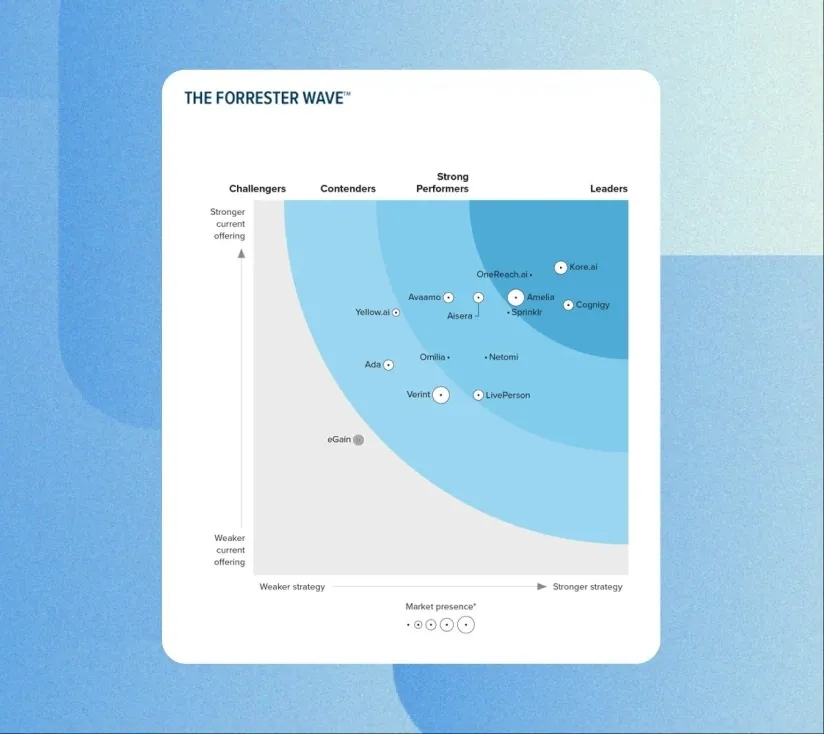
forrester cx wave 2024 Kore at top
Kore.ai named a leader in The Forrester Wave™: Conversational AI for Customer Service, Q2 2024
Generative AI 101
CXO AI toolkit for enterprise AI success
upcoming event

Customer Contact Week (CCW) Las Vegas is widely regarded as the world’s largest and most comprehensive event for customer contact and CX professionals.

Las Vegas
22 Jun
register
Talk to an expert
Not sure which product is right for you or have questions? Schedule a call with our experts.
Request a Demo
Double click on what's possible with Kore.ai
Sign in
Get in touch
Background Image 1
AI Glossary
Adaptive RAG

What is Adaptive RAG?

Adaptive RAG (Retrieval-Augmented Generation) is an approach that dynamically determines how and when external information should be retrieved based on the complexity of a query. It enables AI systems to apply different retrieval strategies instead of relying on a fixed retrieval process.

Traditional RAG systems use the same retrieval method for all queries, regardless of difficulty. Adaptive RAG introduces a decision mechanism that evaluates each query and selects the most appropriate retrieval approach.

This allows AI systems to balance performance and efficiency by retrieving information only when required and at the appropriate level of depth.

How Adaptive RAG works

Adaptive RAG adds a routing or classification layer to the standard RAG pipeline. This layer analyzes the query and determines the level of retrieval required.

For simple queries, the system may generate a response without retrieving external data. For moderately complex queries, it performs a single retrieval step to fetch relevant information. For complex queries, it executes multiple retrieval steps, often involving iterative reasoning across different data sources.

The retrieved data is combined with the model’s internal knowledge to generate the final output. The system may also refine queries, filter retrieved results, and validate responses to improve accuracy.

This adaptive process ensures that retrieval is aligned with task requirements, avoiding unnecessary operations while supporting deeper reasoning when needed.

Key capabilities

Adaptive RAG applies a tiered retrieval model built around five core capabilities.

  1. Dynamic retrieval selection – Adjusts retrieval depth based on query complexity.
  2. Query analysis and routing – Classifies queries to determine the appropriate retrieval strategy.
  3. Multi-step reasoning support – Enables iterative retrieval for complex, multi-hop questions.
  4. Resource optimization – Reduces latency and compute usage by avoiding unnecessary retrieval.
  5. Response validation – Improves output quality through filtering and evaluation of retrieved data.

Why Adaptive RAG matters

Adaptive RAG improves operational efficiency by minimizing unnecessary retrieval steps. This reduces compute cost and response latency, which is critical for production-scale systems.

It enhances response quality by enabling deeper retrieval and reasoning for complex queries. This ensures that outputs are supported by sufficient and relevant context.

The approach also supports scalability. Systems can handle a wide range of query types without over-provisioning resources or degrading performance.

Adaptive RAG strengthens reliability by aligning retrieval strategies with task complexity. This leads to more consistent outcomes across diverse use cases.

Intelligent search: The foundation of enterprise AI
Explore More

Frequently asked questions

Q1. How is Adaptive RAG different from standard RAG?

Standard RAG applies the same retrieval process to all queries. Adaptive RAG selects the retrieval strategy based on query complexity, improving both efficiency and accuracy.

Q2. When is retrieval not required in Adaptive RAG?

Retrieval is skipped for queries that can be answered using the model’s internal knowledge without external context.

Q3. What makes a query complex in Adaptive RAG?

Queries that require multiple reasoning steps, cross-referencing data, or combining information from different sources are considered complex.

Q4. Does Adaptive RAG require additional components?

Yes. It typically includes query classification, routing logic, and evaluation mechanisms, which increase system complexity but improve performance.

Explore the agent platform
Book a demo
Share
Link copied
Forrester logo at display.
Kore.ai named a leader in the Forrester Wave™ Cognitive Search Platforms, Q4 2025
Access Report
Gartner logo in display.
Kore.ai named a leader in the Gartner® Magic Quadrant™ for Conversational AI Platforms, 2025
Access Report
Stay in touch with the pace of the AI industry with the latest resources from Kore.ai

Get updates when new insights, blogs, and other resources are published, directly in your inbox.

Subscribe
Thank you! Your submission has been received!
Oops! Something went wrong while submitting the form.

Related Blogs

View all
November 17, 2025
Agentic RAG : A comprehensive guide
September 5, 2025
Agentic RAG is the next step in smarter enterprise AI
September 7, 2025
AI agents, RAG, and agentic retrieval for enterprises
Accelerate time-to-value from AI

Find out how Kore.ai can help

Talk to an expert
Start using an AI agent today

Browse and deploy our pre-built templates

Marketplace
Background Image 4
Background Image 9
You are now leaving Kore.ai’s website.

‍

Kore.ai does not endorse, has not verified, and is not responsible for, any content, views, products, services, or policies of any third-party websites, or for any verification or updates of such websites. Third-party websites may also include "forward-looking statements" which are inherently subject to risks and uncertainties, some of which cannot be predicted or quantified. Actual results could differ materially from those indicated in such forward-looking statements.


Click ‘Continue’ to acknowledge the above and leave Kore.ai’s website. If you don’t want to leave Kore.ai’s website, simply click ‘Back’.

CONTINUEGO BACK
Agentic AI applications for the enterprise
English
Spanish
Spanish
Spanish
Spanish
Pre-Built Applications
BankingHealthcareRetailRecruitingHRIT
Kore.ai agent platform
Platform OverviewAI for ServiceAI for WorkAgent Marketplace
company
About Kore.aiLeadershipCustomer StoriesPartnersAnalyst RecognitionNewsroom
resources
DocumentationBlogWhitepapersWebinarsAI Research ReportsAI GlossaryVideosGenerative AI 101Responsive AI frameworkCXO Toolkit
GET INVOLVED
EventsSupportAcademyCommunityCareers

Let’s work together

Get answers and a customized quote for your projects

Submit RFP
Follow us on
© 2026 Kore.ai Inc. All trademarks are property of their respective owners.
Trust CenterPrivacy PolicyTerms of ServiceAcceptable Use PolicyCookie PolicyIntellectual Property Rights
|
×