MCP orchestration for scalable enterprise AI with Kore.ai
Last Updated
August 3, 2025

Cobus Greyling
Read Time
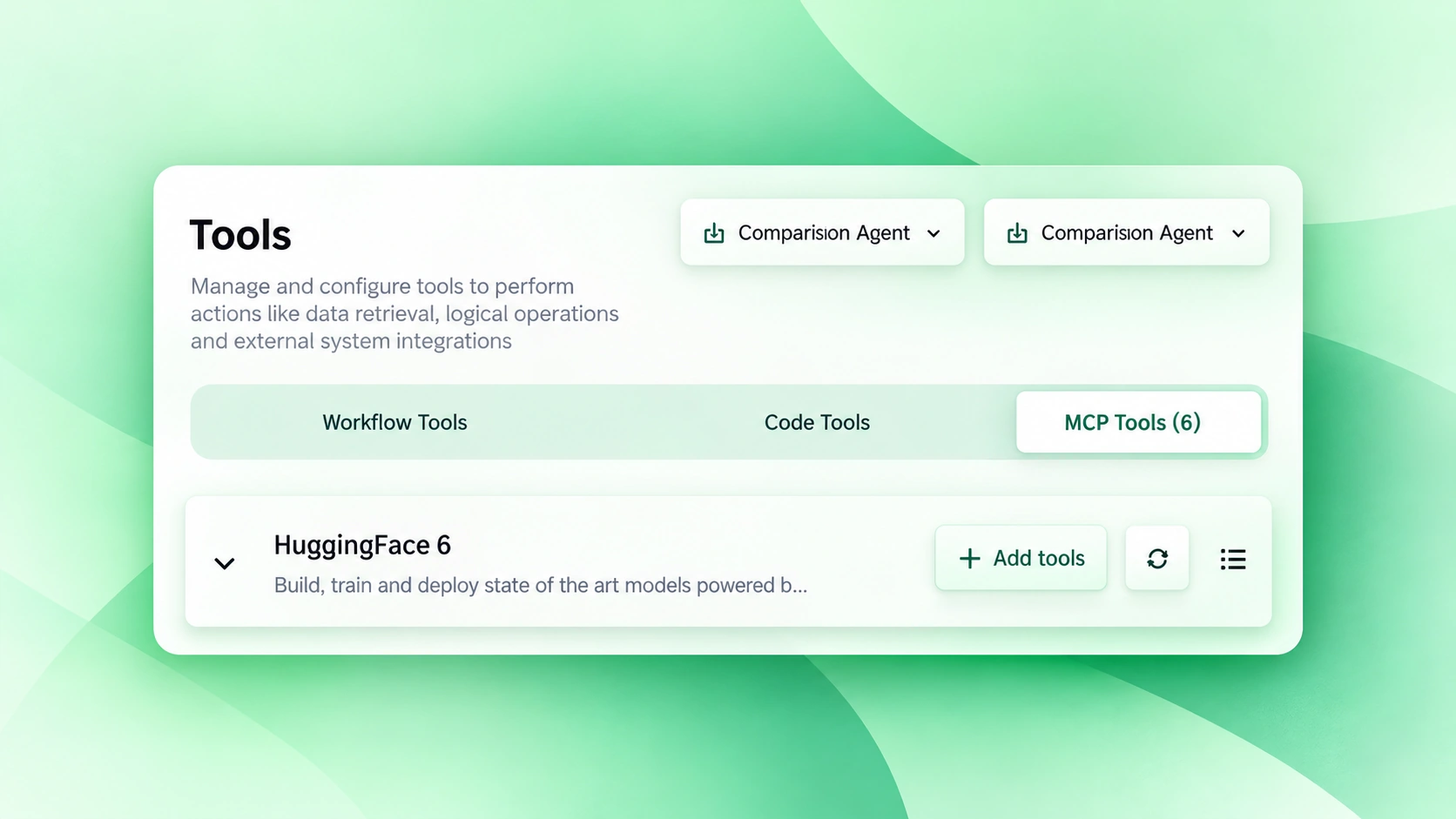
What’s on this page
The role of MCP orchestration
With AI agents potentially accessing numerous servers for a single query, orchestration becomes critical to ensure accurate, efficient responses.
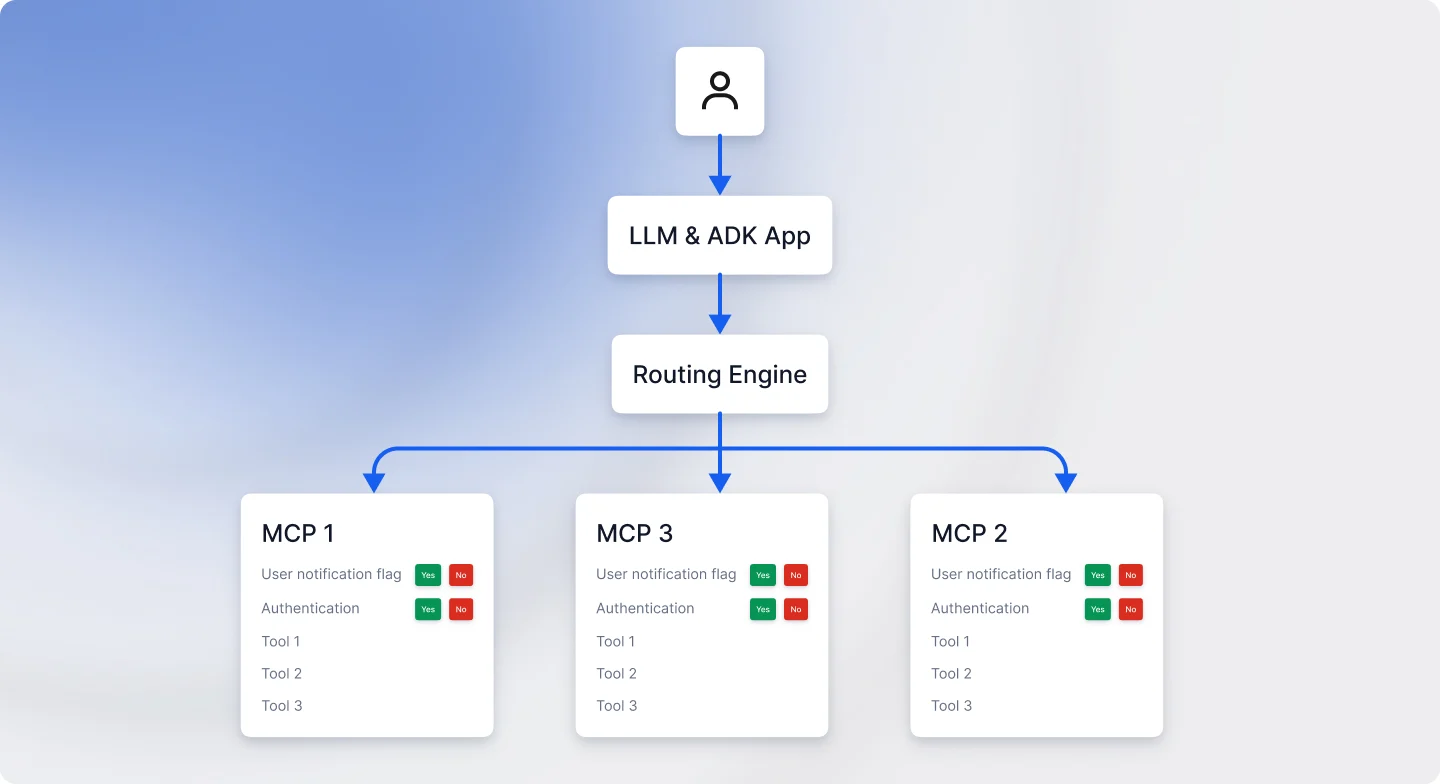
An orchestration layer determines which MCP server to use or the sequence of their use, especially for complex requests involving multiple integrations, such as combining data from different sources.
One approach to governance is training/fine-tuning language models to recognize the most appropriate MCP server based on user intent, as suggested by Nvidia’s research.
Alternatively, tools like DialogGPT could evolve into orchestrators, managing server interactions to streamline workflows. This orchestration layer ensures that AI agents remain contextually aligned, avoiding conflicts or redundant calls to servers.
MCP’s role extends beyond individual integrations to shaping the broader AI agent ecosystem.
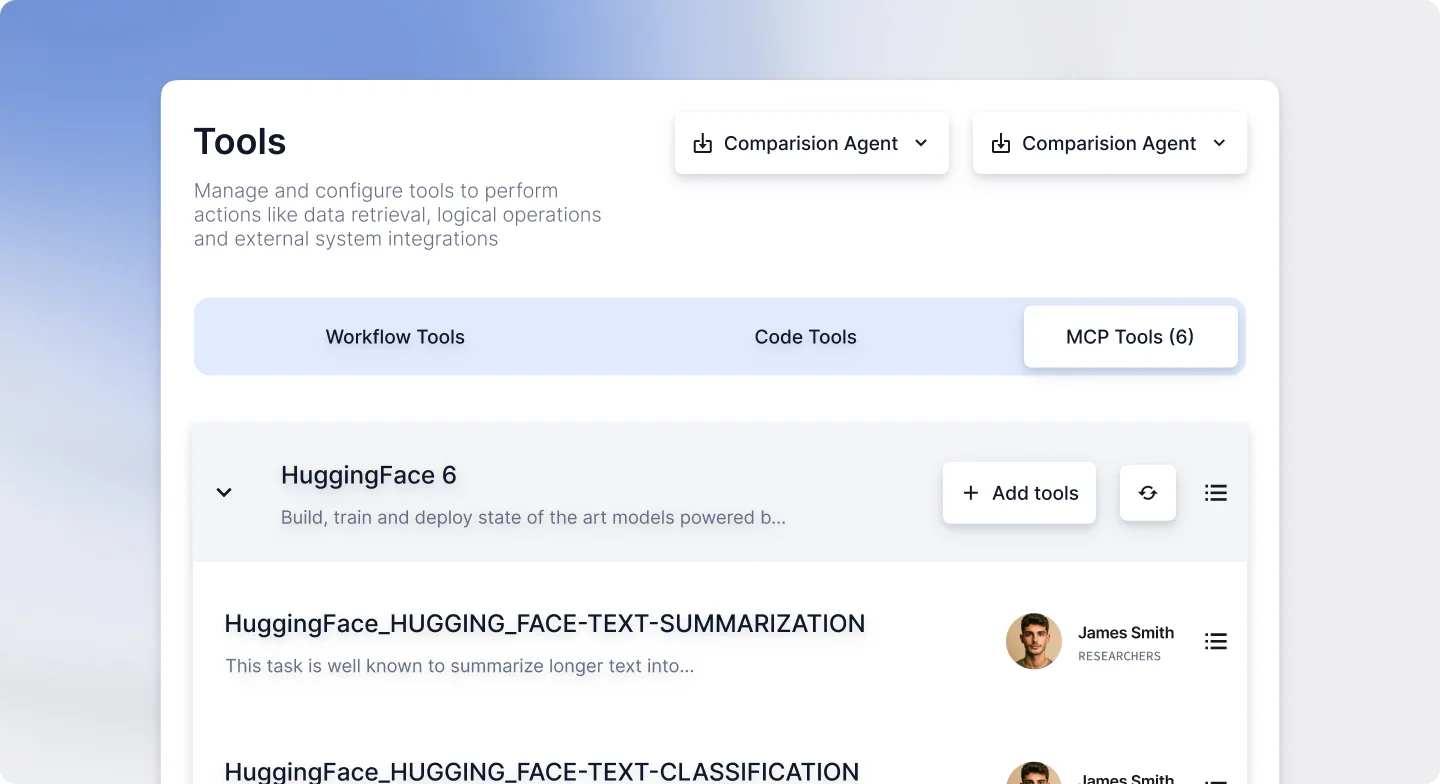
It is already seen as a mature form of integration, akin to a marketplace where servers offer specialized tools and data.
This perspective emphasizes user experience over technical complexity, demystifying MCP for non-technical stakeholders.
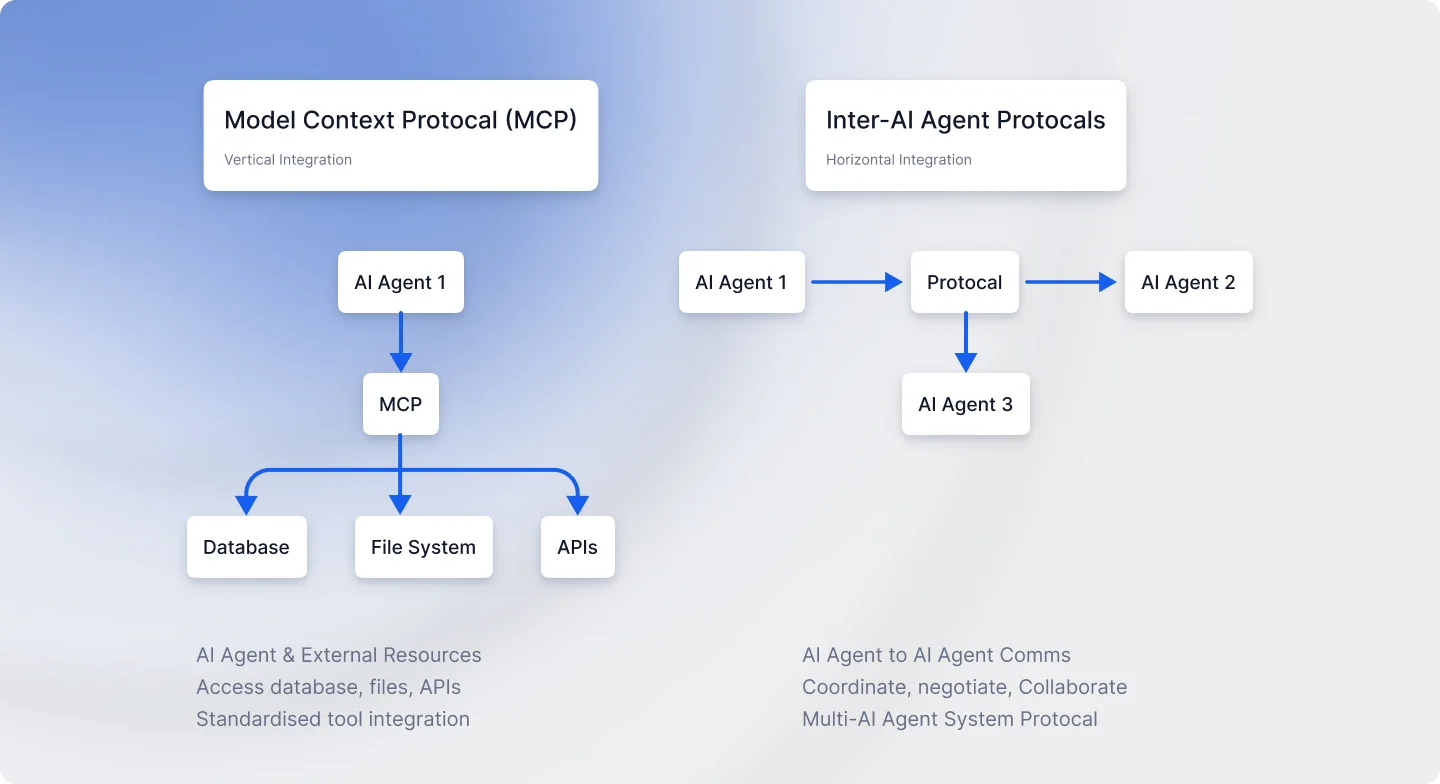
Considering the image below, the Model Context Protocol (MCP) serves as a critical mechanism for vertical integration within an AI Agent, enabling the seamless coordination of its internal components to maintain and utilize contextual understanding across various tasks.
The MCP acts as a centralized framework that integrates the AI Agent's data processing, memory management, and decision-making modules, ensuring that the agent's responses and actions remain coherent and contextually relevant.
This vertical integration allows the AI Agent to function autonomously, with the MCP harmonizing its internal processes to achieve unified objectives efficiently.
In contrast, AI Agent protocols facilitate horizontal integration by establishing standardized communication channels and rules that enable two or more AI Agents to collaborate effectively.
These protocols allow agents to exchange contextual data, synchronize actions, and tackle complex, distributed tasks that require collective intelligence or specialized capabilities.
By enabling interoperability, horizontal integration fosters a networked ecosystem where AI Agents can operate as a cohesive unit, enhancing scalability and adaptability.
The rise of MCP marketplaces, driven by OpenAI and others, points to a future where discovering and integrating servers is as intuitive as browsing the web.
Kore.ai can integrate MCP’s orchestration capabilities to enhance its platform’s ability to manage complex, multi-system interactions. By adopting MCP, Kore.ai’s conversational AI can intelligently select and sequence external tools, ensuring seamless workflows for enterprise clients.
This strengthens Kore.ai’s position as a provider of scalable, governance-focused AI solutions that prioritize user experience and operational efficiency.
Share