Beyond AI agents: the Agentic X continuum and the future of automation
Last Updated
February 21, 2025

Cobus Greyling
Read Time
What’s on this page
Introduction
Gradually introduce AI agents to balance automation with human oversight, bridge the AI agency gap, and build trust in AI agents.
By using AI in steps, applications can give helpful suggestions and automate tasks without making users feel like they’ve lost control. This creates a balance where humans and AI work together, making processes smoother without unnecessary risks.
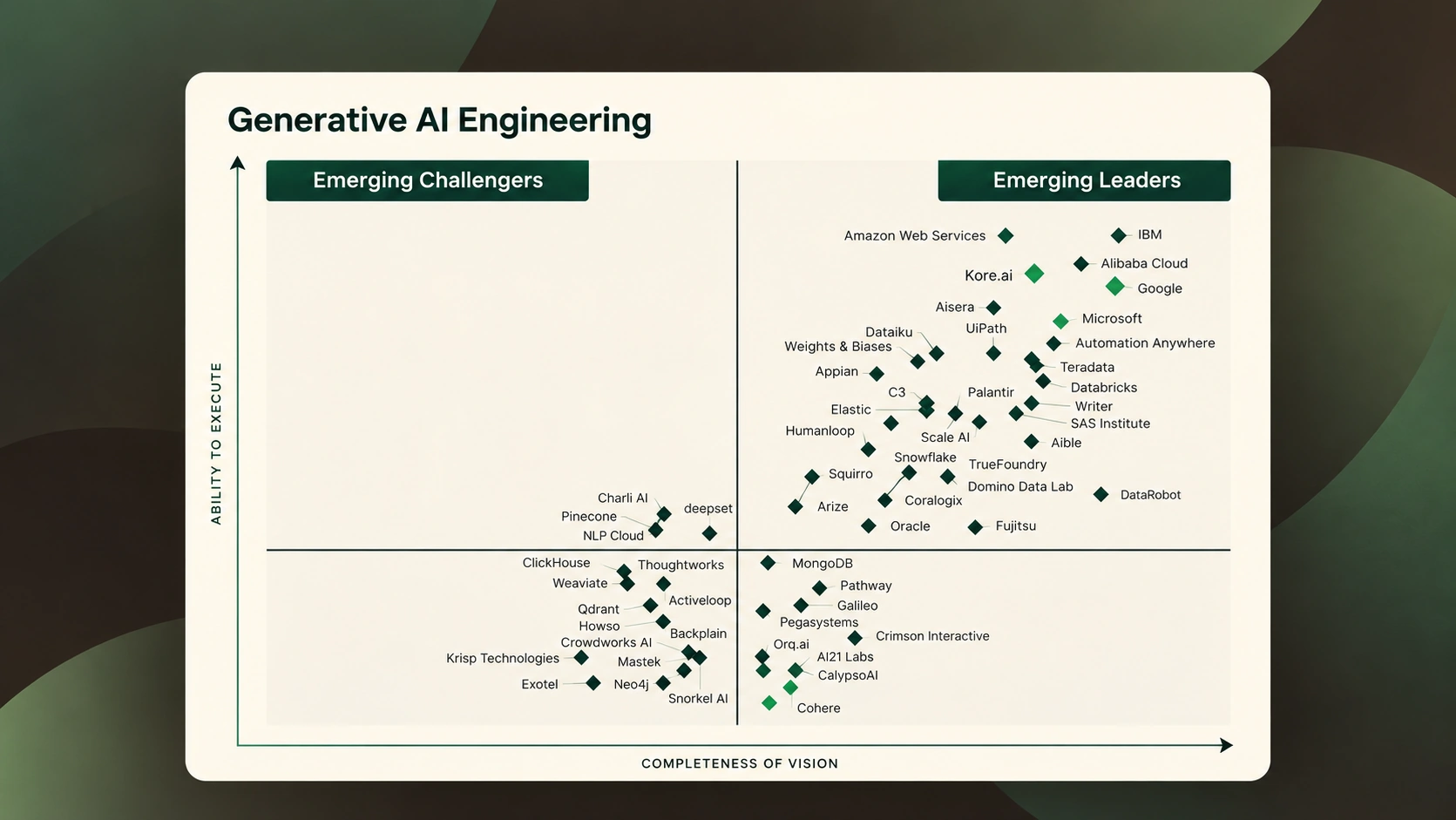
This idea aligns with what Kore.ai has been doing with App-X (Application Experience) and Agentic Workflows, proving that AI doesn’t have to be all or nothing—it can be a helpful partner in the workflow.

AI agents and agency
Companies like Salesforce and ServiceNow have gone all-in on AI Agents, hoping they would revolutionize workflows. However, in practice, a rigid approach to AI has had mixed results. The market is realizing that AI Agents are not just a simple yes-or-no concept.
AI assistance exists on a sliding scale. Some workflows require full automation, while others only need AI to support human decisions. The key is knowing when to use AI and when to let humans take charge.
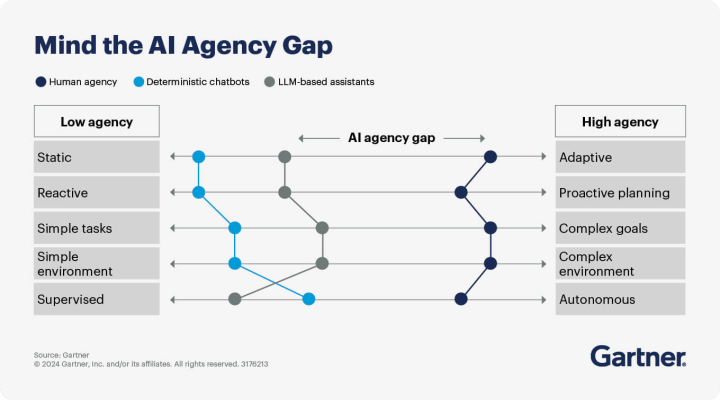
For simple, rule-based tasks, AI Agents may not be necessary, as traditional automation suffices. More complex tasks benefit from AI providing recommendations and guiding workflows. In cases of highly uncertain tasks, AI can analyze data and present insights while still allowing humans to make the final decision. Instead of viewing AI Agents as an all-or-nothing decision, businesses should consider the level of AI involvement that best suits their workflow.
We need to make a distinction between general AI Agents and “Agentic X.” The ‘X’ could stand for Workflow, Orchestration, or Discovery—each representing different levels of AI involvement.
The hype around fully autonomous AI is strong, but its real-world performance often falls short. For example, research shows that some of the best AI Agents today only solve about 24% of tasks successfully, despite costing over $6 per task and requiring multiple steps to complete even simple workflows.
This proves that relying on AI alone is not always efficient. Instead, businesses should focus on Agentic Workflows—where AI helps streamline processes but does not replace human decision-making entirely.
Human in the loop: AI with oversight
Many people worry that AI will take over jobs or make decisions humans should be in charge of. But instead of replacing humans, AI can act as a smart assistant that helps with repetitive tasks while keeping humans in control.
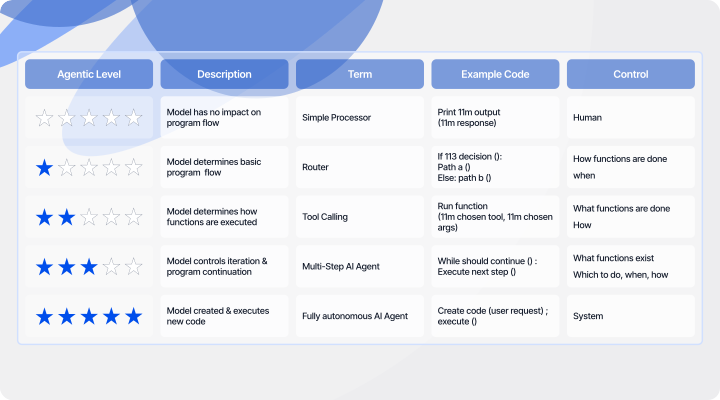
Recent research has shown that adding human oversight at key points in AI workflows helps ensure accuracy and reliability. In Agentic Workflows, AI breaks tasks into smaller steps and handles repetitive work, while humans review important decisions before final actions are taken. AI continuously learns from human input, improving over time. This approach combines the speed and efficiency of AI with the judgment and experience of human workers. It creates a system that is not only faster but also more reliable and adaptable.
Use-case based AI: when to use AI agents
AI should not be seen as a one-size-fits-all solution. Instead, its implementation should be based on factors such as risk level, task complexity, and decision sequences. If a mistake is costly, AI should have less control. Simple tasks don’t need AI Agents, but complex tasks might. The more steps involved in a process, the more AI can help with automation. The best AI strategy is to match the right level of automation to the right task. AI should be a tool that enhances efficiency, not something that forces businesses into rigid workflows.
The ultimate advantage: orchestration and trust
The real value of an AI company lies in two things: orchestration and trust. Orchestration is the ability to seamlessly connect AI tools, data sources, and workflows in a way that makes everything work together smoothly. Trust, on the other hand, ensures that users feel confident that AI will work reliably, ethically, and transparently.
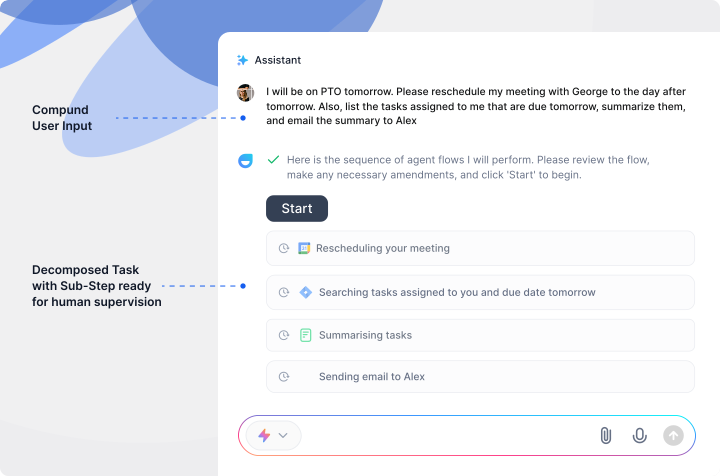
The best AI solutions don’t just throw technology at a problem. They make sure AI works behind the scenes while keeping a simple, user-friendly experience for businesses. This balance of smart automation and user trust is what separates successful AI companies from the rest.
Conclusion
The industry is undergoing a shift away from the rigid definition of AI Agents and moving toward a more flexible, adaptive approach called Agentic X. Businesses that embrace this model will be able to leverage AI in a way that complements human oversight rather than replacing it. Instead of relying on fully autonomous systems, companies can implement AI to enhance efficiency while still keeping humans in control where it matters most.
This transition is not just a technical shift but a strategic one. It allows businesses to introduce automation where it adds value while ensuring trust and transparency in AI-driven decisions. Kore.ai is well-positioned to lead this transformation, offering AI solutions that balance automation with human control. By focusing on Agentic Workflows and smart orchestration, businesses can achieve a level of AI integration that is both effective and responsible. The future of AI is not about removing human involvement but enhancing it with smarter, more strategic automation.
Share