




.webp)
What is agentic orchestration?
Agentic orchestration is the structured coordination of AI agents, automation systems, and human inputs across enterprise workflows. It enables multiple agents and systems to operate together within defined processes, ensuring consistent execution, visibility, and control.
It extends traditional orchestration by incorporating AI agents that can make decisions, adapt to context, and interact across systems. Orchestration defines how these agents collaborate, when human intervention is required, and how tasks progress across workflows.
By managing dependencies, execution logic, and decision flows, agentic orchestration ensures that distributed AI systems function reliably within enterprise environments.
How agentic orchestration works
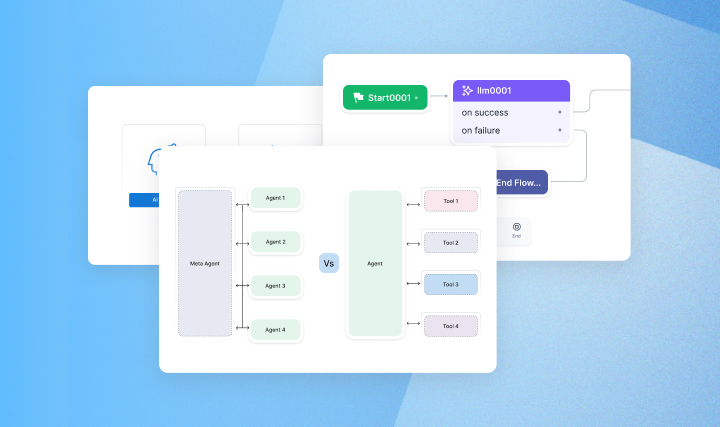
Agentic orchestration coordinates multiple AI agents, each designed for specific functions such as data retrieval, decision-making, or task execution. The orchestration layer assigns tasks, manages interactions, and integrates outputs into a unified workflow.
It uses rules, context, and real-time signals to determine how work is distributed. Tasks can shift dynamically between agents, automation tools, and human operators based on complexity, risk, or exceptions.
The system also maintains process state, monitors execution, and ensures that all actions align with defined business logic and policies. This allows workflows to operate continuously, even as conditions change.
Key capabilities
Multi-agent coordination – Enables multiple specialized AI agents to collaborate within a shared process.
Dynamic task routing – Assigns tasks based on context, agent capability, and real-time workflow conditions.
Hybrid workforce integration – Combines AI agents, automation tools, and human inputs within a single operational framework.
Process visibility – Tracks workflow execution, agent actions, and system performance across end-to-end processes.
Governance and guardrails – Enforces rules, escalation paths, and compliance requirements for all activities.
Continuous optimization – Uses performance data to refine workflows and improve efficiency over time.
Why agentic orchestration matters?
Agentic orchestration enables organizations to operationalize AI at scale. It provides a structured way to manage complex workflows that involve multiple systems, agents, and decision points.
It improves efficiency by coordinating tasks across agents and automation tools, reducing manual effort and process delays. Work is distributed based on capability, ensuring optimal use of resources.
It enhances reliability by maintaining control over how decisions are made and executed. Organizations can monitor workflows in real time, audit outcomes, and enforce governance policies consistently.
Agentic orchestration also supports scalability. New agents, tools, or workflows can be introduced without redesigning existing systems, enabling gradual expansion of AI capabilities across the enterprise.